+34 620 10 75 37info@nanbiosis.com








Integrated service to create and optimize antibody-functionalized nanoconjugates for reliable diagnostics and nanomedicine.
Scientific Leader / leaders of the project: Prof. M. Pilar Marco (U2, CAbS) and Dr. Carlos Rodríguez (U12)
Coordinator of the project: Nuria Pascual (U2) and Susana Vilchez (U12)
Many diagnostic and nanomedicine projects fail to progress beyond the prototype stage because the recognition element and the nanostructured carrier are developed separately. In practice, antibody generation, hapten design, and immunoassay development require strong expertise in antigen selection and bioconjugation, while colloidal systems intended for diagnostics, drug delivery, or theranostics must be optimized for size, surface charge, stability, formulation robustness, and reproducibility. This gap becomes even more critical when the final product is an antibody-functionalized nanoprobe, a liposomal or micellar assay reagent, or a bioconjugate intended for point-of-care use.
This combined service offers an integrated workflow that connects the production of custom antibodies and immunoreagents (U2) with the physicochemical characterization of nanostructured liquids, dispersions, and nanoassemblies (U12). U2 contributes the design of haptens and peptides, antibody generation and purification, immunoassay development, and bioconjugation expertise. U12 adds advanced characterization of colloidal systems, including DLS/SLS, zeta potential, colloidal stability, phase behavior, surface/interfacial tension, viscosity, microscopy, and SEM. Together, both units provide a seamless route to develop, optimize, and validate antibody-based nanoprobes, nanodiagnostics, and nanoformulations with higher robustness and translational potential.
Examples and scientific publications implementing this Cutting-Edge Biomedical Solution:
Services involved:
The steps and services involved in this cutting-edge solution are the following:
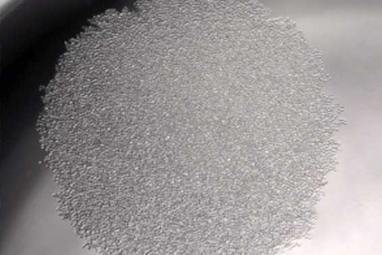 |
CAbS (U2) is managed by the scientific team of the Nb4D group (Nb4D) with high expertise in hapten synthesis, conjugation and antibody production.We have an extensive track record of successful projects in developing polyclonal and monoclonal antibodies against small molecules and peptidesfor the development of diagnostic tools. These include, for example, the evaluation of carcinogenic processes, cardiovascular diseases, and infectious diseases. |
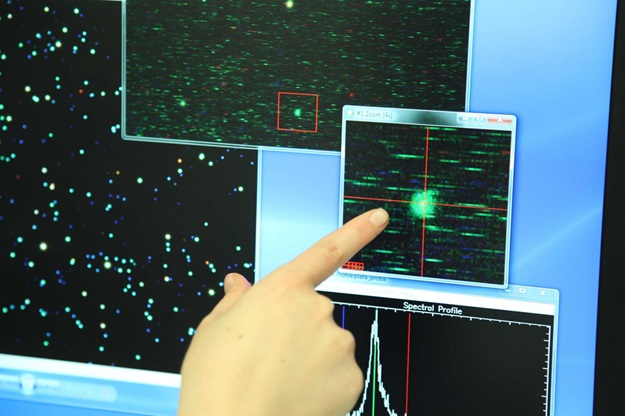 |
Our Unit 12 is located at the Institute of Advanced Chemistry of Catalonia (IQAC-CSIC), in Barcelona and it is coordinated by the Colloidal and Interfacial Chemistry Group, led by Dr. Carlos Rodríguez. The unit is focused on the characterization of nanostructures in liquids and liquid/liquid interfaces, such as micelles, liposomes, micro- and nano-emulsions, and nanoparticles. The unit features state-of-the-art instrumentation for the determination of various parameters such as size distribution and zeta potential (surface charge), critical micelle concentration (CMC), solubilization capacity, osmolarity, surface and interfacial tension, wettability, refractive index, turbidity, colloidal stability, density, viscosity and other rheological parameters (shear and elastic moduli, critical yield stress, etc.) The Unit 12 has implemented and maintains the ISO9001 certification forstandard quality control system. |