+34 620 10 75 37info@nanbiosis.com








From bespoke recombinant antigens to high-affinity antibodies: one integrated pipeline for targets standard methods can’t reach.
Scientific Leader / leaders of the project: Pilar Marco (U2) / Merce Márquez Martínez (U1) / Cristina Ruiz (U30)
Coordinator of the project: Nuria Pascual (U2)
A major bottleneck in industrial diagnostics and biomedical research is often the lack of commercially available antigens for specialized or emerging targets. Successful antibody generation strictly depends on having high-quality antigens that are properly folded, soluble, correctly exposed, and immunogenically competent. Standard antibody development frequently fails when native target proteins are unstable, insoluble, or unavailable. Consequently, there is a critical need for custom, “a la carte” antigen design capable of engineering specific conformational states and exposed epitopes while overcoming cross-reactivity risks associated with structurally homologous proteins.
To solve these industry challenges, there is a critical need for an integrated end-to-end pipeline that bridges advanced antigen engineering with custom antibody development. The first stage focuses on designing and producing tailored recombinant proteins or specialized chimeric constructs engineered with optimized antigenic domains to maximize immunogenicity and specificity. This rationale directly feeds into the second stage, where these custom-engineered antigens are immediately deployed for targeted antibody generation. By uniting antigen design—including complex chimeric constructs—with downstream antibody production under a single coordinated workflow, this joint approach eliminates supply bottlenecks, minimizes cross-reactivity, and yields high-affinity antibodies against targets that standard methods cannot achieve.
Examples of scientific publications and projects implementing this Cutting-Edge Biomedical Solution:
During the SARS-CoV-2 pandemic, U1 and U2 collaborated in the development of recombinant Spike S1 antigens and anti-S1 antibodies. In the context of the POC4CoV project, aimed at developing Point-of-Care technologies for rapid COVID-19 diagnosis, CAbS developed antibodies against the SARS-CoV-2 Spike protein and other viral proteins for their potential application in diagnostic platforms. CAbS also contributed to the generation and purification of an in-house rabbit polyclonal antibody against recombinant Spike S1. This polyclonal antibody (PAb410), together with the corresponding antiserum (As410), was subsequently used as a positive control and quality-control reagent during the development and manufacturing of the Immuno-μSARS2 peptide/protein microarray. The chip was developed to profile the IgG and IgM immune responses of COVID-19 patients against SARS-CoV-2 structural proteins and selected peptide epitopes.
Related publication: Guercetti, J.; Alorda, M.; Sappia, L.; et al. Immuno-μSARS2 Chip: A Peptide-Based Microarray to Assess COVID-19 Prognosis Based on Immunological Fingerprints. ACS Pharmacology & Translational Science 2025, 8(3), 871–884. DOI: 10.1021/acsptsci.4c00727.
Services involved:
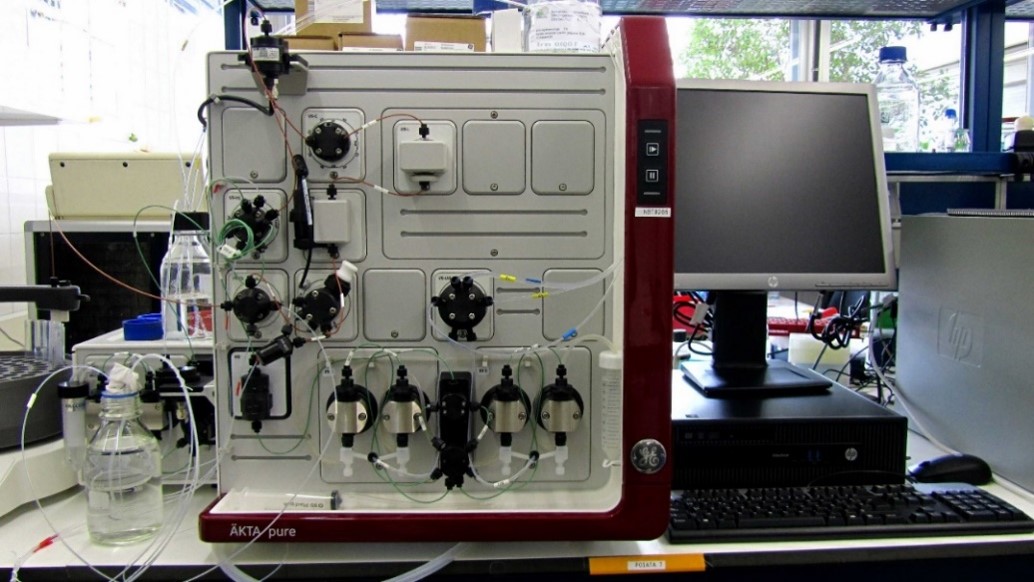
In the first stage, Unit 1 (Protein Production Platform) designs and expresses tailored recombinant proteins or specialised chimeric constructs featuring optimised antigenic domains to maximise immunogenicity and specificity.
This feeds directly into the second stage, where Unit 2 (Custom Antibody Service) uses these custom-engineered antigens to produce high-affinity, target-specific antibodies.
A complementary proteomic stage, carried out by Unit 30 (Proteomics), confirms by mass spectrometry the identity and integrity of the antigens and/or antibodies generated, and can identify post-translational modifications, sequence variants or mutations.
By combining Unit 1‘s antigen design, Unit 2‘s downstream antibody generation and Unit 30‘s MS-based confirmation in a single coordinated workflow, this joint approach eliminates supply bottlenecks, minimises cross-reactivity, and successfully targets proteins that standard methods cannot reach.
U1 – Protein Production Platform
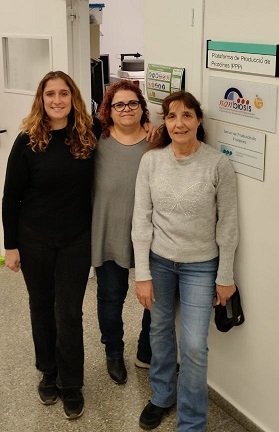
U2 – Custom Antibody Service (CAbS)
U30 – Proteomics
 |
The PPP Unit 1 is at the Institute of Biotechnology and Biomedicine of the Autonomous University of Barcelona (IBB-UAB). It counts with the necessary facilities for the design, production, and purification of recombinant proteins. This facility is coordinated by the Nanobiotechnology Group, led by Prof. Antonio Villaverde. It has both highly specialized personnel and the necessary equipment to offer a “tailored” service for the design, production, and purification of recombinant proteins using both prokaryotic and eukaryotic expression systems. Its location allows this service to be linked with other complementary services available within the university (Cell Culture, Cytometry, Production of Antibodies, Microscopy, Proteomic, and Bioinformatic, X-ray crystallography, and Microarray and Sequencing Services), as well as facilitating the management of subsequent uses of the produced protein. |
 |
Unit 2 (CAbS) is managed by the scientific team of the Nb4D group (Nb4D), led bu M-Pilar Marcom with high expertise in hapten synthesis, conjugation and antibody production.We have an extensive track record of successful projects in developing polyclonal and monoclonal antibodies against small molecules and peptidesfor the development of diagnostic tools. These include, for example, the evaluation of carcinogenic processes, cardiovascular diseases, and infectious diseases. |
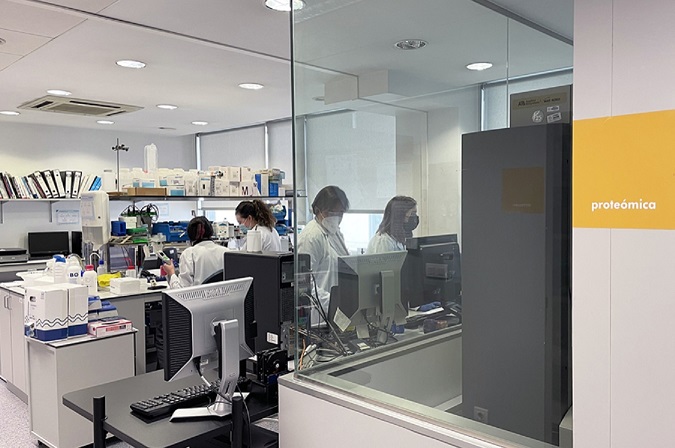 |
The Proteomics Unit is at the Biomedical Research Institute of A Coruña (INIBIC-CHUAC-UDC). It counts with all necessary facilities for the analysis of proteins at a small- and large-scale, including three mass spectrometers, liquid chromatographs, electrophoresis systems and instruments for immunoassay development and readout. |