



U13-E01. MicroCT GE eXplore Locus SP (GE)
Temporarily OUT OF ORDER

Temporarily OUT OF ORDER
U12-E14. Avanti J30I ultracentrifuge (Beckman Coulter)
Description:
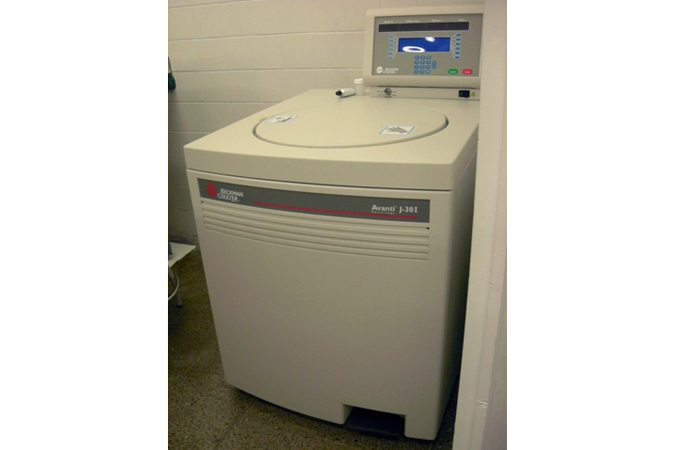
High-speed centrifuge with aluminum rotors at fixed angle – Rotor JA-25.15 (maximum centrifugal force = 74200g, maximum speed = 25000 rpm, capacity for 24 tubes of 15 mL each, total capacity = 360 mL) – Rotor JLA-16.250 (maximum centrifugal force = 38500g, maximum speed = 16000 rpm, capacity for 6 tubes of 250 mL each, total capacity = 1500 mL) – Rotor JA-10 (maximum centrifugal force = 17700g, maximum speed = 10000 rpm, capacity for 6 tubes of 500 mL each, total capacity = 3 L)
Applications:
It allows to centrifuge samples such as emulsions, dispersions, etc at angular velocities up to 25000 rpm (74200 g) at various temperatures (from -20˚C a 40˚C), which can be used for phase separation, stability studies, etc. in colloidal systems and for the separation of cells and proteins.
U12-E13. Turbiscan-lab-backscattering-stability-analyzer-formulaction
Description:
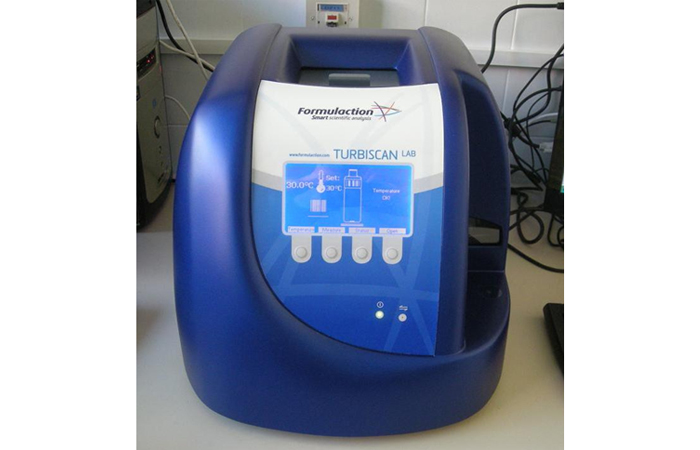
Instrument for the evaluation of colloidal stability. It measures turbidity by multiple light scattering, as a function of time along the vertical axis by both transmitted and backscattered light. It can analyse samples up to 95 vol% with a wide range of particle sizes (10 nm – 1 mm). The samples are placed inside a temperature-controlled chamber, and the measurements can be carried out from room temperature up to 60 ˚C.
Applications:
Allows to study the colloidal stability of emulsions, suspensions and foams and to determine whether there is sedimentation, creaming, flocculation or coalescence.
U12-E12. BX51TRF6 Olympus Optical Microscope
Description:
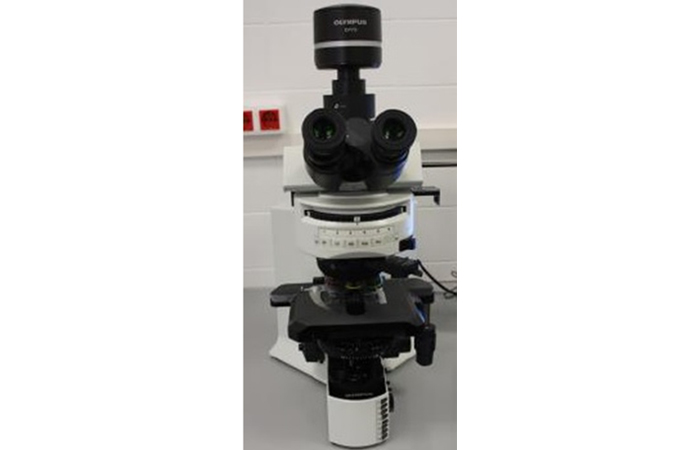
Optical microscope that can work with transmitted or reflected light. Different observation methods can be used: bright field, dark field, phase contrast, differential interference contrast, polarized light, and fluorescence. It includes two revolvers to work at short or long distances. Moreover, it is equipped with a digital camera (Olympus DP73) connected to the computer with a software that captures images and videos.
Applications:
Observation of samples at microscale
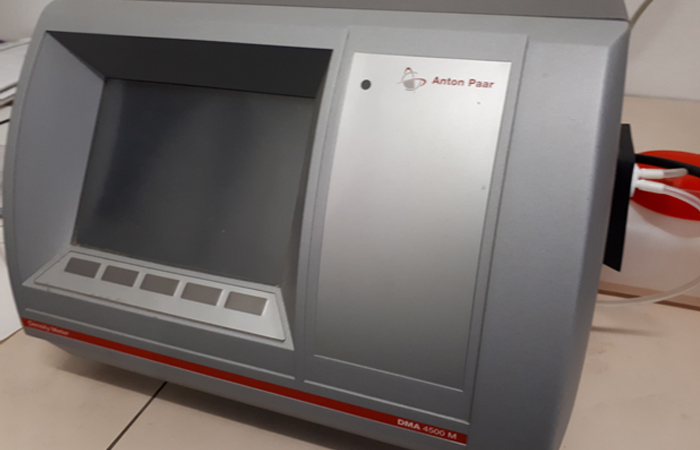
U12-E11. DMA -46 densitometer (Anton Paar)
Description:
Instrument for the Determination of the density of liquid samples using Pulsed Excitation. It is a highly precise instrument, measuring density by the method of resonance vibration frequency of a glass capillary.
Applications:
Measurement of the density of liquid samples at controlled temperature
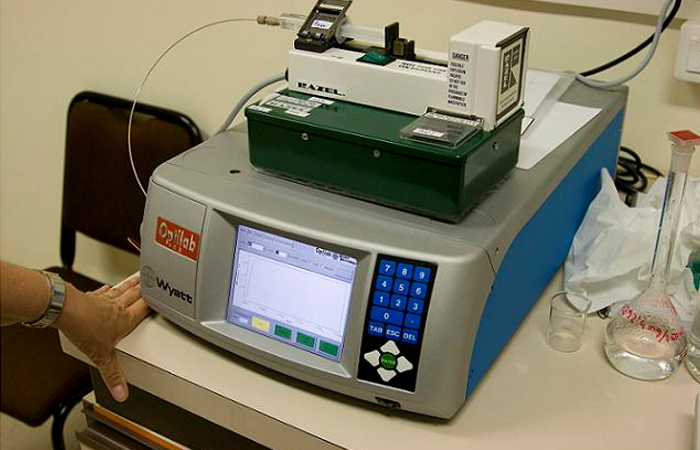
U12-E10. Optilab rEX Differential Refractometer
Description:
The Optilab® rEX (refractometer with EXtended range) is a Refractive Index measurement system. It has a flow cell with a total volume of only 7.4 µL. This translates into minimized band broadening and better temperature stability. It can measure the absolute refractive index of a solution. In addition, it can measure the dn/dc of a solvent at a fixed wavelength. The light source in the rEX can be replaced for other wavelengths (e.g. 690, 633, 488 nm, etc.). The temperature can be programmed from 4°C to 50°C. It is compatible with all HPLC systems.
Applications:
Refractive Index determination, mainly of liquid samples, can be useful in measurements of other techniques (Dynamic Light Scattering as an example). It can be also possible to calculate the refraction index as a function of concentration for a compound. This can allow you to determine the purity or concentration of the compound which is dissolved in a liquid.
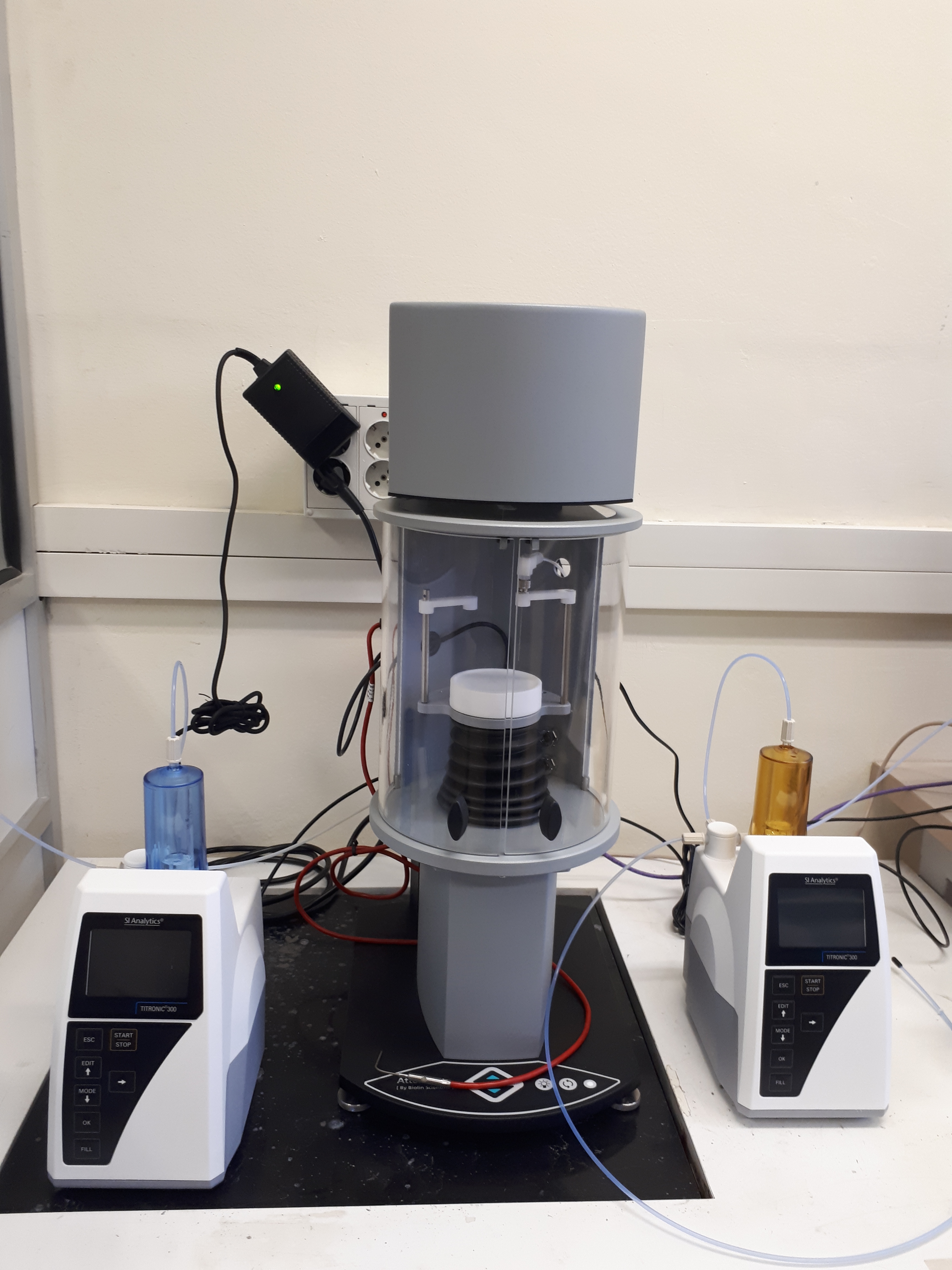
U12-E09 Sigma 701 force tensiometer (Biolin Scientific) for the measurement of surface and interfacial tensions, wettability and critical micelar concentration
Description:
High resolution force tensiometer with software for control, acquisition and data treatment for the measurement of surface and interfacial tensions, as well as the automatic determination of critical micellar concentrations. It is equipped with Wilhelmy plate and Du Nouy ring accessories. It can also measure contact angle on powder samples (Washburn method)
Applications:
Surface and interfacial tension determination of liquid systems. Contact angle determination of liquids on single fibers (fiber diameter greater than 20 mm), solid (cylindrical or plate shapes) and porous materials (cylindrical or plate shapes).
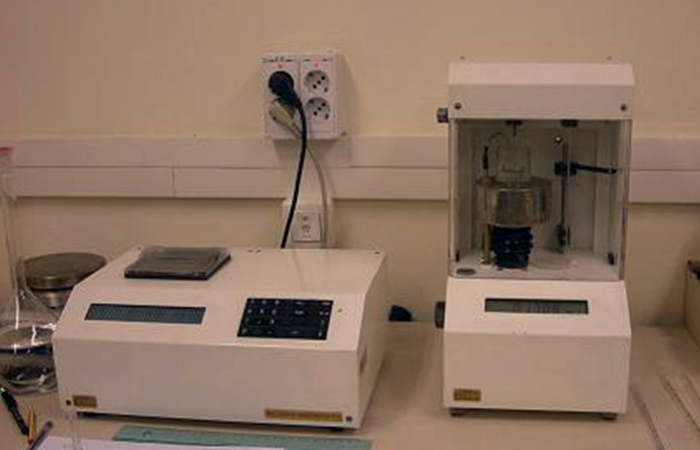
U12-E08. Contact angle goniometer and drop shape analyzer
Description:
Electrobalance for determination of surface tensions (liquid/gas) and interfacial tensions (liquid/liquid) porpoises.
Applications:
Determination of surface tensions (liquid/gas) and interfacial tension (liquid/liquid).
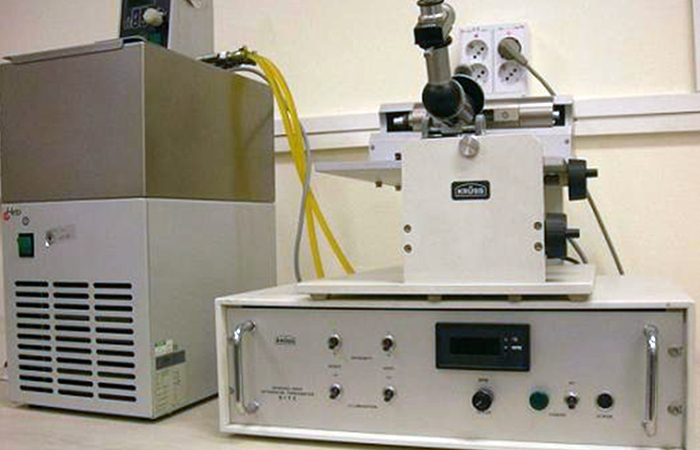
U12-E07. SITE Spinning Drop Interfacial Tensiometer
Description:
Instrument for determination of liquid-liquid interfacial tensions by the spinning drop method
Applications:
Determination of ultra-low interfacial tensions (up to 10-5 mN.m-1) in colloidal liquid-liquid biphasic systems at controlled temperature.
U12-E06. S3 Micro SAXS/WAXS Small and Wide Angle X-Ray Spectrometer
Description:
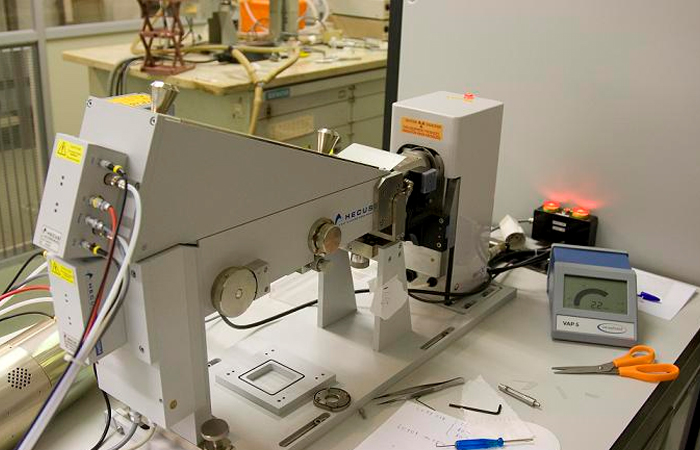
S3 MICRO instrument (Hecus X-ray Systems, Graz, Austria) for determinations of X-ray scattered intensity as a function of scattering angle. This instrument is equipped with a GENIX microfocus X-ray source and a FOX 2D point-focusing element (both from Xenocs, Grenoble). It can measure simultaneously at small angle (0,2º-8º) and wide angle (18º-28º).
Applications:
Structural characterization of materials within the nanometer range. This includes determination of symmetry, morphology, characteristic size, fractal dimension and surface area. These studies can be applied to liquid crystals, micellar aggregates, mesoporous materials, nanoparticles, proteins and nanostructured films.