

+34 620 10 75 37info@nanbiosis.com

ICTS

ICTS

The Medicine of the Future needs the Nanomedicine Revolution. This is why

The medicine of the future is an increasingly tackled topic. In the context of global concern for the sustainability of the health system (chronic diseases, new disorders, aging population and financing problems), nanomedicine could promote more affordable and personalized health care and improve the quality of life of the patients.

Between innovative techniques already implemented and concepts that evoke science fiction (nanobots, fluorescent particles working as spies, tiny Trojan horses introduced into our body …), nanomedicine generates great expectations.

Nanomedicine, what is it exactly?

Nanomedicine is the application of nanotechnology to medicine, that is, the use of nanotechnologic systems for the prevention, diagnosis or treatment of diseases, due to the particular properties that materials present on a nanometric scale. (Yes, although it seems strange, the same material has totally different attributes and behaviours when “nano” amounts of it are manipulated, what is very important in medicine, since many of the processes of the human body take place on a nanometric scale).

The current state, thanks to the previous effort.

When in 1959 Richard Feynmand, (Nobel Prize in Physics in 1965), gave his speech “There is a lot of space down there”, he opened the door to research at the nano scale: from 1nm to 100nm, this is one-millionth of a millimeter (10-9 meters); we are talking about the range of sizes resulting from dividing the diameter of a hair between 1,000 and 10,000, (or what a nail grows in a second).

Since the entry into the market of the first nanomedicine in 1995 (Doxil®, a drug encapsulated in liposomes for the treatment of cancer), nanoparticles or nanostructures have been developed for the controlled release of drugs in cancer and other pathologies, nanodevices have been created for disease diagnosis or nanomaterials have been designed for applications in regenerative medicine, and even messenger RNA vaccines for Covid-19, such as those from Pfizer and Moderna, are nanoformulated. Today there are on the market a hundred nanoformulated drugs all thanks to previous research and development of nanomaterials and nanoparticles over the last three decades.

The “Observatory of Trends in Medicine of the Future” promoted by the Roche Institute foundation has recently published a Report on Nanomedicine coordinated by Dr. Ramón Martínez Máñez, Professor of Inorganic Chemistry at the UPV and Scientific Director of the Centre for Networked Biomedical Research in Bioengineering, Biomaterials and Nanomedicine (CIBER-BBN) in which Dr. José Becerra, Professor of Cell Biology at the University of Malaga and Principal Researcher at CIBER-BBN, BIONAND and IBIMA, Dr. Pilar Marco, Principal Investigator of the Nanobiotechnology group for the diagnosis (Nb4D) of the IQAC-CSIC and Coordinator of the Nanomedicine Research Program of the CIBER-BBN and Dr. María Jesús Vicent, Chief Researcher of the Therapeutic Polymers Laboratory and coordinator of the Advanced Therapies Area of ​​the Príncipe Felipe Research Center have participated as experts. The report was presented at the IV Conference “Anticipating the Medicine of the Future” on November 30, 2021 where a debate was held by the above mentioned in which various topics related to nanomedicine were discussed, such as its applications and barriers.

Nanomedicine applications of today and tomorrow

Nanomedicine is completely transversal, multidisciplinary and dependent on other disciplines, so its applications are multiple and complementary to other branches of knowledge such as artificial intelligence, but the following fields stand out fundamentally.

The design of nanomaterials that improve biocompatibility or biomechanical properties is investigated and can be used for the manufacture of implants that allow replacing portions of diseased tissue and that can even be designed in a personalized way attending to the individual response of each patient, minimizing the risk of rejection by the patient in regenerative medicine.

Nanoparticles are used to build highly sensitive nanodiagnostic platforms, which provide comprehensive biological information easily, quickly and economically at an increasingly early stage. Pilar Marco visualizes a future where “the diagnosis could be our molecular fingerprint, so that the detection of changes in said fingerprint could lead to the detection of a disease before the patient presents symptoms. In turn, this will contribute to prediction and prognosis since, if a large amount of information is available, it can be crossed with genetic information”.

Nanomedicine makes it possible to improve the pharmacokinetics and pharmacodynamics of current drugs, so that they specifically deploy their activity in diseased cells and tissues in a controlled way over time and crossing any biological barrier, which is called controlled drug release. According to Ramón Martínez “Any disease can be susceptible to use these systems to deliver a drug in the appropriate organ or tissue with the reduction of drug doses and side effects.”

Finally, nanotechnology methods facilitate the fusion of diagnosis and therapy in the new medical field of theragnostic; diagnose and treat at the same time by understanding the biological response to treatments, that is, the administration of drugs whose molecules allow visualize how the drug is working.

Barriers faced by nanomedicine

In addition to the difficulties presented by nanomedicine in matters of regulation and industrial property, the aforementioned experts agree that one of the most important challenges is the standardization of manufacturing procedures and quality controls, investment is needed in infrastructures to fine-tune manufacturing and standardization systems (manufacturing of nanoparticles under GMP) and in collaboration with the private sector, which is crucial, to make nanomedicine reach the productive sector and society.

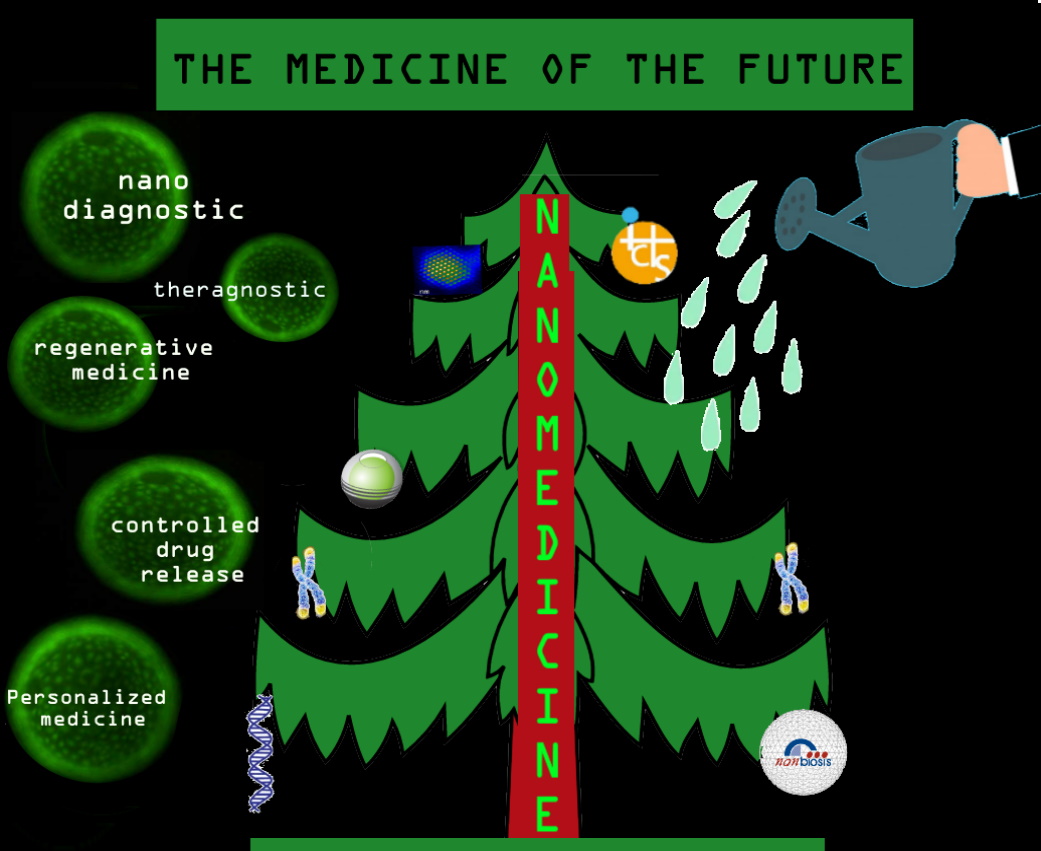
But there are also barriers in the research itself, and funding is needed to break them down. In nanomedicine research, cost / effectiveness analyses have to be focused on the long term. Professor José Becerra explains it very clearly: “Research topics become fashionable and it happens frequently that the years go by and administrations “get tired” of financing a certain field and this is a problem because if a tree is planted by a person who knows It takes ten years to bear fruit, this person has to take care of the tree, but if we give the tree care to someone who does not know about trees, probably this person will abandon the tree in five years … Scientific policies have to persevere in financing nano and accompany it with an improvement in the regulation of products and only then will companies invest in this area”.

At the end of the debate, Professor José Becerra celebrated that the Carlos III Health Institute opted, fifteen years ago, for the creation of a CIBER in Bioengineering, Biomaterials and Nanomedicine, as a tool for scientific policy, he also mentioned the NANBIOSIS platform created by CIBER-BBN, CCMIJU and BIONAND, recognized as ICTS by the Ministry and available for companies and researchers to produce and characterize bio and nanomaterials, and stated that “it is evident that it is not possible to advance in the transfer of knowledgy from nano to the clinic at the same rate as is done in other knowledge areas but to take care of this project is essential”.

Related news:

Nanomedicine in the Medicine of the future

The Nanomedicine Revolution

informe sobre nanomedicina

‘Point-of-care or PoC’ devices are able to directly detect the genetic material of the virus in just 30 minutes

A more effective nanomedicine has been developed for the treatment of Fabry rare disease

Nanomedicine: how to get drugs to the place where they have to act.

A new generation of devices for the rapid, cheap and easy diagnosis of candidemia

New Nanomedicines for the topical treatment of complex wounds

Sources of information:

Nanomedicine (European Nanotecnology Platform)

IV Jornada Anticipando la Medicina del Fututo

Nanomedicine Report

Nanomed Spain

Read More

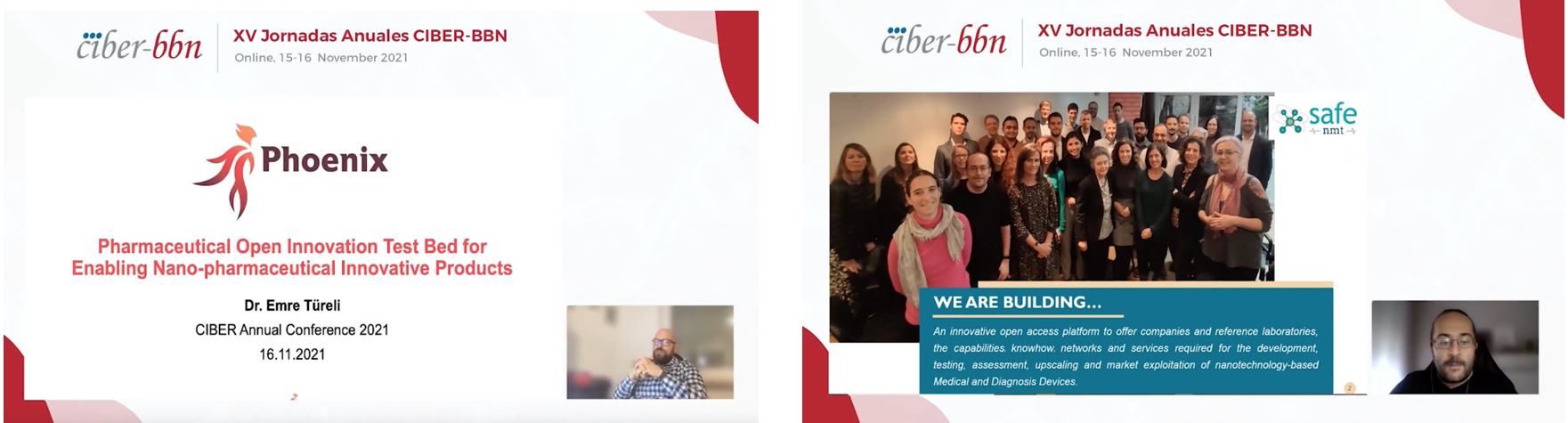
‘SAFE-N-MEDTECH’ and ‘PHOEHIX’ OITBs in CIBER-BBN and NANBIOSIS annual Conference.

National and international leading researchers met online last November 15 and 16 at the XV CIBER-BBN Annual Congress to discuss the latest advances in bioengineering, biomaterials and nanomedicine research, and promote further collaborations in the field.

This year’s CIBER-BBN Annual Conference included three plenary lectures given by internationally recognized experts in the fields of SARS-CoV-2 infection and vaccination, biomedical signal processing for sleep disorders, and regenerative medicine and biosensors. In addition to a selection of internal collaborations, valorization projects and collaboration projects with the CIBER of Oncology, the three programs of the Precision Medicine Infrastructure (IMPaCT) were presented.

NANBIOSIS ICTS contributed to the scientific program of the Conference with a session dedicated to the Open Innovation Test Beds (OITBs). More precisely, Dr. Ángel del Pozo, from Biokeralty presented the SAFE-N-MEDTECH OITB as an example of innovation booster for medical devices, while Dr. Emre Türeli, from MyBiotech GmbH, was invited to describe PHOENIX, a Pharmaceutical OITB for Enabling Nano-pharmaceutical Innovative Products.

Both OITBs’ scope is to cover the gap between research in nanomedicine and clinical practice. Their main objective is to provide the research community and the rest of stakeholders with a fully functional infrastructure for the testing, validation and upscaling of new nano-pharmaceuticals and medical devices through a single entry point.

NANBIOSIS is participating in SAFE-N-MEDTECH leading the corner stone work-package of preclinical validation of nano-enabled medical technologies and also contributing to their previous physico-chemical characterization. Besides that, it coordinates a Test Case about innovative nanostructured implants for bone repair, and participates in three more, all proposed by industrial partners of the project.

CIBER-BBN is participating in Phoenix OITB, as well, with the Unit 6 of NANBIOSIS ICTS (Biomaterials Processing and Nanostructuring Unit) at the Institute of Materials Science in Barcelona (ICMAB-CSIC) as well as the BioNanoSurf group at the Aragon Institute of Materials Science (INMA-CSIC).

These projects have received funding from the European Union’s Horizon 2020 Research and Innovation Programme under Grant Agreements No. 814607 (SAFE-N-MEDTECH) and No. 953183 (PHOENIX)

Read More

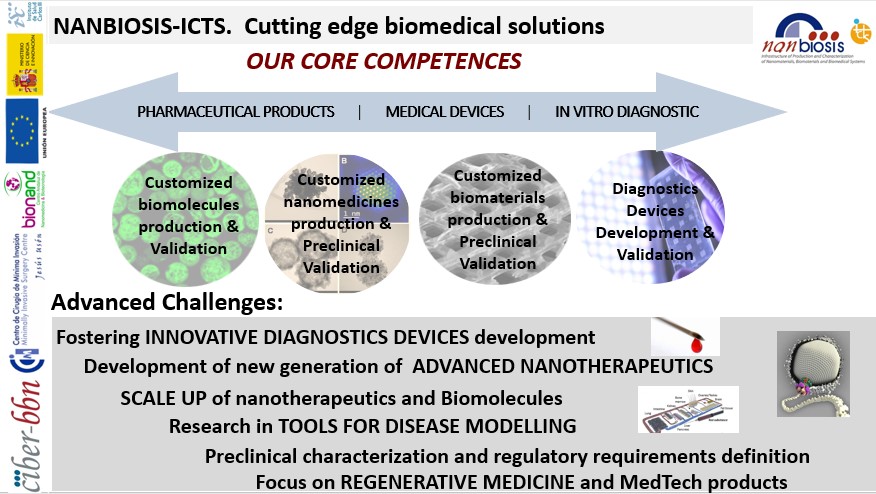
New NANBIOSIS’ focus on Cutting-Edge Biomedical Solutions

We are delighted to announce the publication of our new corporate brochure which reflects NANBIOSIS’s main core competences. This fresh looking promotion material has been intentionally designed to emphasize our experience of join expertise and capabilities solving problems in biomedical research, focussing on quality, adaptability and excellence commitment.

The NANBIOSIS’ Cutting-Edge biomedical solutions  have been updated to offer a wider range of Integrated solutions to advanced challenges faced by biomedical researchers in the fields of tissue engineering, regenerative medicine, diagnostic and medical devices.

The Cutting-Edge biomedical solutions offered by the ICTS NANBIOSIS have been organised drilling down on our key areas:

  • Customized biomolecules production & Validation
  • Customized nanomedicines production & Preclinical Validation
  • Customized biomaterials production & Preclinical Validation
  • Diagnostic Devices production & Validation

Downloadable PDF of the brochure is here available

Read More

NANBIOSIS participates in a transversal action of CIBER incorporated into the Biobanks and Biomodels Platform of the Carlos III Health Institute

Recently, a transversal action of CIBER has been started, coordinated by Cristina Villena, made up of teams from 4 thematic areas of the CIBER (CIBERES, CIBERER, CIBER-BBN and CIBERONC) that has constituted a unit of the CIBER that has been incorporated into the new Platform of Biobanks and Biomodels of the Carlos III Health Institute (ISCIII).

The CIBER unit has been selected in the call for ISCIII Platforms to support R+D+I in Biomedicine and Health Sciences of the Strategic Action in Health 2017-2020, which will finance the Platform of Biobanks and Biomodels and two more platforms on support to clinical research and revitalization of the industrial capacities of the National Health System.

This transversal unit of the CIBER, which is one of the 41 units that will be part of the Biobanks and Biomodels Platform, will be financed with more than 130,000 euros over the next three years.

The ISCIII Biobanks and Biomodels Platform (2021-2023) will coordinate the supply of biological samples of conventional diseases through the creation of virtual biobanks, and in turn, will develop the provision of services in the field of organoids, animal models and 3D printing of tissues.

The CIBER unit initially involved, (due to their long experience in providing services), the CIBER Pulmonary Biobank Platform for Respiratory Diseases (PBP CIBERES), with 12 years of operation; the CIBER Biobank of Rare Diseases (CIBERER Biobank, CBK), with 9 years; the Mouse Embryo Cryopreservation Service (CRIOCNB) and Histology (HISTOCNB) of the CIBERER (CNB-CSIC) with 16 years; and the Non-Invasive Neurofunctional Evaluation Service (ENNI) of the CIBERER (Institute of Biomedical Research “Alberto Sols” (IIBM-CSIC / UAM)) with 14 years; as well as the ICTS NANBIOSIS platform of the CIBER for Bioengineering, Biomaterials and Biomedicine (CIBER-BBN) with 8 years and the work modules of the Center for Biomedical Research in Cancer Network (CIBERONC).

This initiative, based on the collaborative work of several thematic areas of the CIBER, has as main objectives: (i) to create a CIBER catalog of biological samples and biomodel services available to consultable R + D + i, and with a common integrated management to be able to develop a CIBER Virtual Biobank; (ii) identify new existing biomodels at the CIBER, as well as technical capabilities and services that may be of interest, which can also be offered to researchers outside the institution itself; and (iii) create alliances with other similar structures to harmonize procedures and processes in the provision of research services.

“Without a doubt, this platform will improve the visibility, performance and offer of all the existing bio-resources and research support services at the CIBER, which will contribute to improving collaboration between researchers, the quality of research, as well as the transfer to the clinical practice and the productive sector ”, according to Cristina Villena

ISCIII platforms

The ISCIII Platforms are a set of research centers and groups that share their high-level scientific-technical capacities with research groups of the National Health System (SNS), and with a clear orientation to health sciences, to patients and their families, with the aim of making Spanish groups more competitive in the new Horizon Europe program.

In the 2020 call, the ISCIII has financed the Biobanks and Biomodels Platform and 2 more platforms, the Support Platform for Clinical Research and a platform that will facilitate the industrialization of the developments and research of the National Health Service, with a Global financing for the three platforms of 27 million euros to be executed during 2021-2023.

Read More

Agreement signed with Spanish Government for the allocation of FEDER funds for NANBIOSIS ICTS units at JUMISC

In the framework of the FEDER Program in ICTS  2019 14 50, a project related to the ICTS NANBIOSIS has been selected by the Ministry of Science, Innovation and Universities for co financing with FEDER funds of the European Regional Development Funds program.

An agreement has been signed between Ministry of Science and Innovation and CCMIJU, institution for the co financing of the Project ICTS 2019 14 50 : Genética embrionaria en reproducción asistida (GENERA NANBIOSIS) in Unit 23.

The total budget of the project amounts to € 98.000, with 80% financing with FEDER Funds.

CCMIU is processing the necessary contracting procedures for the execution of this project.

Read More

Agreement signed with Spanish Government for the allocation of FEDER funds for Nanbiosis ICTS

In the framework of the FEDER Program in ICTS 2014-2020, a projects related to the ICTS NANBIOSIS has been selected by the Ministry of Science, Innovation and Universities for co-financing with FEDER funds of the European Regional Development Funds program.

An agreement has been signed between Ministry of Science, Innovation and CCMIJU, institution that houses NANBIOSIS  U14, U19, U21, U22, U23, U24 for the co-financing of the Project ICTS-2019-14-46: “ACTUALIZACIÓN DE LAS INFRAESTRUCTURAS E IMPLEMENTACIÓN DE UN SISTEMA DE CONTROL DOCUMENTAL Y DE GESTIÓN LIMS PARA POTENCIAR LAS CAPACIDADES DE LAS UNIDADES DE LA ICTS DISTRIBUIDA NANBIOSIS (AILIMS-NANBIOSIS)”

 The total budget of the project amounts to € 597.000, with 80% financing with FEDER Funds.

CCMIU is processing the necessary contracting procedures for the execution of this project.

Read More

New equipment for calorimetry and surface characterization for NANBIOSIS U16

NANBIOSIS unit 16 Surface Characterization and Calorimetry Unit form CIBER-BBN and University of Extremadura offers the performance of tasks of physical-chemical characterization of surfaces using techniques such as ellipsometry, calorimetry, X-ray photoelectronic spectroscopy (XPS) and detection of secondary ions by means of mass spectrometry by time of flight (Tof-SIMS). Recently, new equipment acquired through the execution an investment of 1.3 million euros, cofinanced with FEDER funds, the Ministry of Economy and Competitiveness and Junta de Extremadura, Regional Ministry of Economy, Science and Digital Agency, througth the project FICTS1420-14-09. These equipments are a microdroplet and picodroplet contact angle goniometry system and an optical profilometry system.

Equipment acquired

PEAK AND MICRO DROP GONIOMETRY SYSTEM

This system allows to measure contact angles automatically, controlling by software, the deposition of drops of different liquids, their analysis and the orientation of the substrate, as well as pending drops. In addition, the microdroplet system has a tilting base that allows the samples to be tilted by at least 90o. It also includes a thermostatic chamber, for temperature changes of the sample with a range between 5 and 90 ºC, and a chamber for humidity control.

Obtaining surface tension, through contact angle measurements, is a factor to consider in technologies of biomedical interest such as implants and other materials that must be in contact with biological fluids. In these systems the contact angle is related to the wettability, the hydrophobicity of the surface and the adhesion capacity of substances such as proteins or other compounds on the surfaces.

In the case of pico-droplet measurements, the system allows to very precisely dose drops much smaller than in the previous case, which can be as low as 20 picoliters, as well as to analyze their shape to measure the contact angle. This fact solves the problem of measuring wettability in very small structures, such as capillaries, microchips, joints created in the union of two materials, etc.

PROFILOMETRY SYSTEM

The system allows the roughness of a multitude of surfaces to be measured by an optical method that does not make any changes to the sample. With the operating base of a confocal microscope commonly used in different fields of science, it allows to create high-resolution 3D images quickly and automatically, as well as obtaining color images thanks to the use of three LEDs: Red, Green and Blue. With the available objectives, it is possible to measure from more macroscopic samples such as screws used as dental implants to be able to observe bacterial colonies composed of bacteria the size of a micron. This will make it possible to measure the roughness of any sample covering the range of roughness between a magnifying glass, which gives a more macroscopic view, and the atomic force microscope capable of measuring nanometric roughness (10 ^ -9 m). In addition, this equipment also works as an interferometer that allows to measure the roughness with greater precision of mirror polished samples in a simple way, obtaining images of higher resolution than any confocal technique.

Read More

Funded beamtime for SMEs in Sincrotron Alba ICTS thanks to EU CALIPSOplus projec. – Dec. 17 explanatory Webinar Calipsoplus-TamaTA for SMEs

Untill 30 of June 2021, small and medium companies can ask for funded beamtime in different European light sources thanks to EU CALIPSOplus project

The European project CALIPSOplus brings together 19 partners offering access to 14 synchrotrons and 8 FELs in Europe and the Middle East. This pilot transnational access scheme allows SMEs to access the best light source for their particular needs, irrespective of whether or not it is the closest light source.

Leader: CELLS (ALBA Synchrotron) (Barcelona, Spain)

Webpage: https://www.albasynchrotron.es/en/industry/services

Email: industrialoffice@cells.es

On December 17, 2020 – 12:00 – 13:00 Sincrotrón ALBA -ICTS is running a Webinar that will explain to companies how SMEs can benefit from the Calipsoplus-TamaTA project to solve their characterization problems at the ALBA Synchrotron. Inscriptions are open here

NANBIOSIS and SYNCROTRON ALBA, both ICTS facilities established some collaborations in order to increase the scope of the biomedical solutions given to the health sector.

Read More

Two new equipment items at the U6 of Nanbiosis with cofinancing from FEDER funds

The U6 of NANBIOSIS (Biomaterial Processing and Nanostructuring Unit) has expanded its capabilities with 2 new equipment items for the characterization unit. Both equipment items will allow the characterization of some physico-chemical properties of different nanomaterials.

The Zetasizer ULTRA is used to measure the particle size of dispersed systems from sub-nanometer to several micrometers in diameter, using the technique of Dynamic Light Scattering (DLS). Zetasizer systems are also used to analyze particle mobility and charge (Zeta potential) using the technique of Electrophoretic Light Scattering (ELS), and the molecular weight of particles in solution using Static Light Scattering (SLS).

The Green laser module for the NanoSight NS300 equipment. The NS300 allows analysis of the size distribution and concentration of all types of nanoparticles from 0.01 – 1 µm in diameter. This new laser module will allow NTA to measure a range of fluorescent particles, avoiding interferences during the measurements due to sample (auto)fluorescence and absorption.  This is done by detecting the fluorescence signal, which is emitted naturally by particles or as a result of fluorescence labeling or tagging


This equipment have been confinanced by the European Regional Development Fund (ERDF) through the Plurirregional Operational Program of Spain (POPE)2014-2020

European Regional Development Fund
Read More

NANBIOSIS in the new poster of ICTS map published by Spanish Goverment.

ICTS underpins the Spanish reputation for research excellence.

In the picture: the new poster of the ICTS map in which NANBIOSIS facilities have been highlighed with a red square

The term Unique Scientific and Technical Infrastructure (ICTS) refers to facilities, resources, or services for the development of top-quality cutting-edge research, as well as the communication, exchange, and preservation of knowledge, the transfer of technology, and promotion of innovation. They are unique or exceptional in their fields, with a high cost of investment, maintenance, and operation, and are of a strategic importance that justifies their availability to all actors in the field of R&D&I. The ICTS share three fundamental characteristics; they are infrastructures with public ownership, unique and open to competitive access.

ICTS offer an opening capacity percentage of their essential services under ‘Competitive Open Access’ for the use by national and international public and private sector researchers, with the support of technical and administrative personnel of the ICTS. Infrastructures access is ruled by a public “Access Protocol” that describes the procedure and criteria for access to the infrastructure. The main features of ‘Competitive Open Access’ are that R + D + i quality of activities developed at the infrastructure should be proven and that requests for access should be prioritized on the basis of objective criteria.

The dissemination of ICTS and their capabilities is essential to provide Spanish and international researchers with access to a large base of quality services and facilities, a basic requirement for the development of excellent science.

The new posster pushised by the General Subdirectorate of Large
Scientific-Technical Facilities of the of the Sapanish Ministry of Science and Research Innovation helps to disseminate and understand the map of ICTS wich are located throughout the country

NANBIOSIS, is one of the five ICTS in the field of Health Sciences and Biotechnology

Further informations: MICINN

Read More