

+34 620 10 75 37info@nanbiosis.com

Sin categoría

Sin categoría

Posters presentation by NANBIOSIS Units in CIBER-BBN ANNUAL CONFERENCE 2017

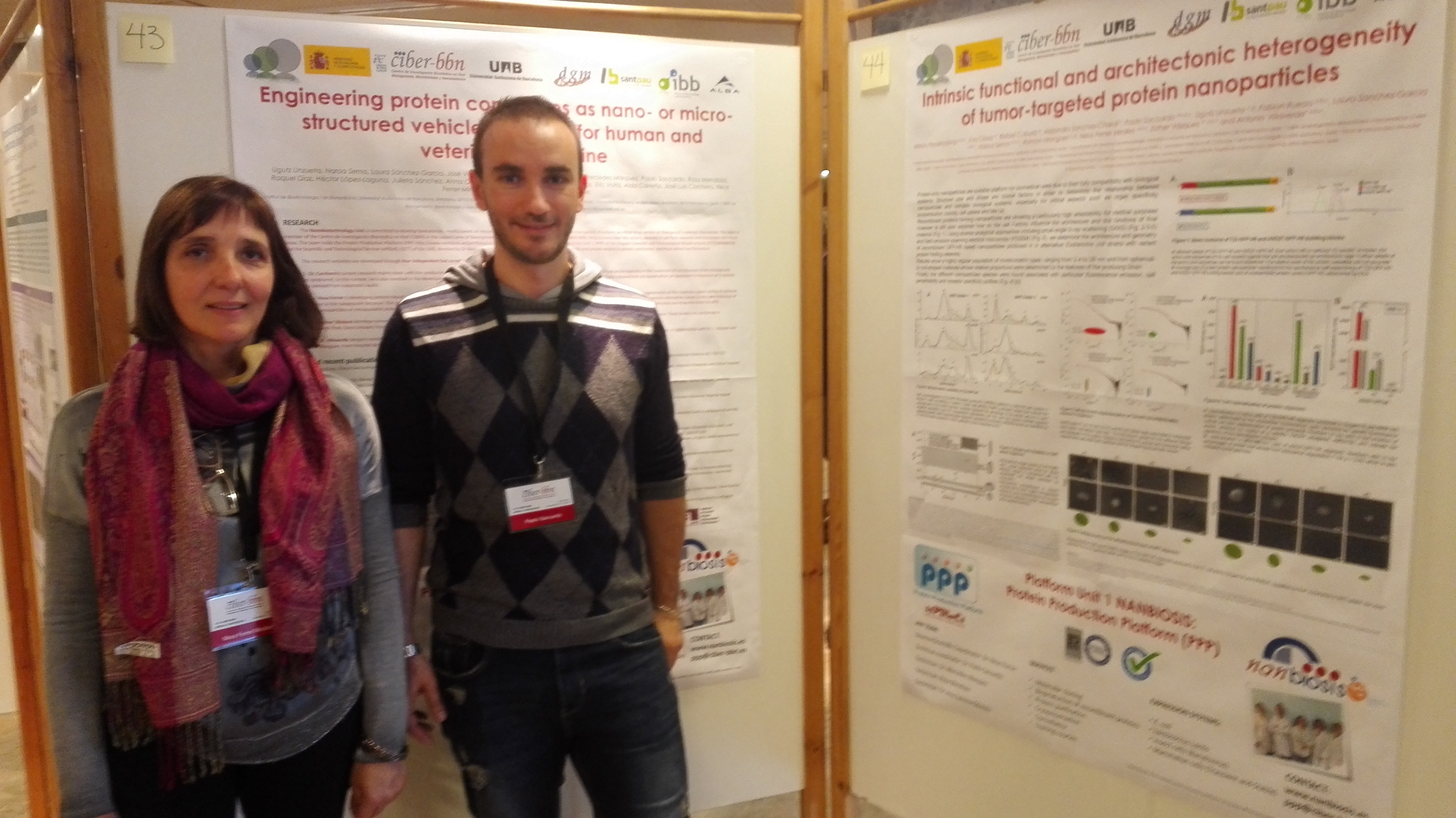
Last 13 and 14 of November, CIBER-BBN  has celebrated its 11th Annual Conference in Hotel Santemar in Santander. In this conference there was a poster session with the participation of the following Units of NANBIOSIS. Special mention deserves Unit 1 with Neus Ferrer as Director and  Paolo Saccardo as Coordinator (in the picture):

Posters:

U1. Protein Production Platform (PPP):

Engineering protein complexes as nano- or micro-structured vehicles or drugs for human and veterinary medicine. Ugutz Unzueta, Naroa Serna, Laura Sánchez-García, José Vicente Carratalá, Olivia Cano-Garrido, Mercedes Márquez, Paolo Saccardo, Rosa Mendoza, Raquel Díaz, Héctor, López-Laguna, Julieta Sánchez, Anna Obando, Amanda Muñoz, Andrés Cisneros, Eric Voltà, Aida Carreño, José Luis Corchero, Neus Ferrer-Miralles, Esther Vázquez, Antonio Villaverde.

Units  U1. Protein Production Platform (PPP) and U18. Nanotoxicology Unit:

Intrinsic functional and architectonic heterogeneity of tumor-targeted protein nanoparticles. Mireia Pesarrodona, Eva Crosa, Rafael Cubarsi, Alejandro Sanchez-Chardi, Paolo Saccardo, Ugutz Unzueta, Fabian Rueda, Laura Sanchez-Garcia, Naroa Serna, Ramón Mangues, Neus Ferrer Miralles, Esther Vázquez, Antonio Villaverde.

Units U3. Synthesis of Peptides UnitU6. Biomaterial Processing and Nanostructuring Unit, and U20. In Vivo Experimental Platform:

Synthesis of different length monodisperse COL-PEG-PEPTIDE to increase biodisponibility of multifunctional nanovesicles for Fabry’s desease. Edgar Cristóbal-Lecina; Daniel Pulido; Solène Passemard; Elizabet González-Mira; Jaume Veciana; Nora Ventosa; Simó Schwartz; Ibane Abasolo; Fernando Albericio and Miriam Royo.

Units U13. Tissue & Scaffold Characterization Unit and U17. Confocal Microscopy Service::

Preclinical behavior of medium-chain cyanoacrylate glue with two different surgical application forms for mesh fixation in abdominal wall repair. Gemma Pascual, Bárbara Pérez-Köhler, Marta Rodríguez, Claudia Mesa-Ciller, Ángel Ortillés, Estefanía Peña, Begoña Calvo, Juan M. Bellón.

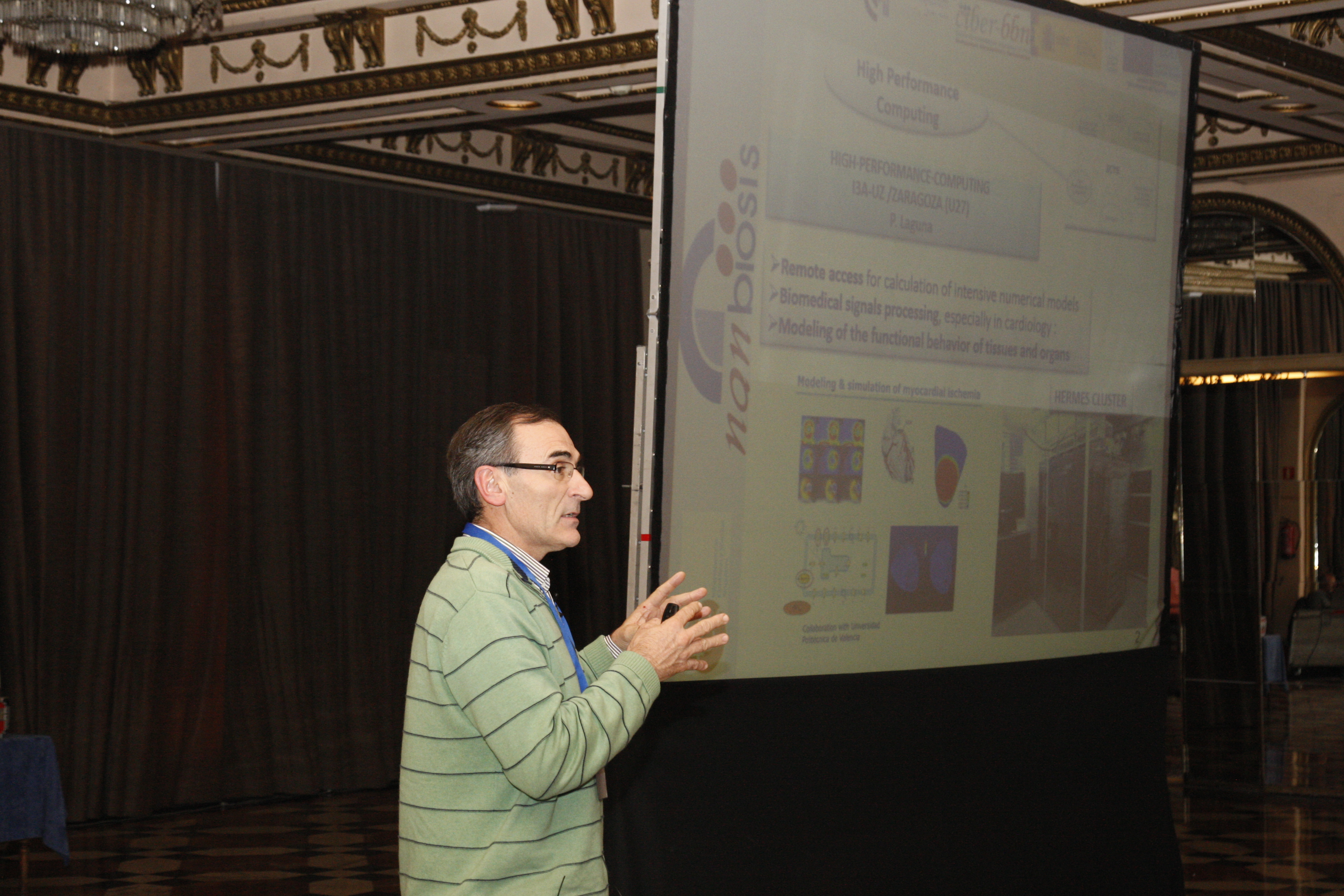
Units U27. High Performance Computing and U8. Micro – Nano Technology Unit:

Inspiration and Expiration Dynamics in Acute Emotional Stress Assessment. Javier Milagro, Eduardo Gil, Jorge M. Garzón-Rey, Jordi Aguiló, Raquel Bailón.

U5. Rapid Prototyping Unit:

Poly-DL-lactic acid films functionalized with collagen IV as carrier substrata for corneal epithelial stem cells. Ana de la Mata, Miguel Ángel Mateos-Timoneda, Teresa Nieto-Miguel, Sara Galindo, Marina López-Paniagua, Xavier Puñet, Elisabeth Engel, Margarita Calonge.

U6. Biomaterial Processing and Nanostructuring Unit:

Strategy for engineering myoglobin nano-traps for biomedical sensing technology. E. Laukhina, O. V. Sinitsyna, N. K. Davydova, V. N. Sergeev, A. Gomez, I. Ratera, C. Blázquez Bondia, J. Paradowska, X. Rodriguez, J. Guasch, Jaume Veciana.

Structure and nanomechanics of quatsome membranes. B. Gumí-Audenis, L. PasquinaLemonche, J.A. Durán, N. Grimaldi, F. Sanz, J. Veciana, I. Ratera, N. Ventosa and M.I. Giannotti

U7. Nanotechnology Unit:

Bioreceptors nanostructuration study for early detection of Alzheimer. José Marrugo, Dr. Samuel Dulay, Dr. Mònica Mir, Prof. Josep Samitier.

RGD dendrimer-based nanopatterns promote chondrogenesis and intercellular communication for cartilage regeneration. Ignasi Casanellas, Anna Lagunas, Iro Tsintzou, Yolanda Vida, Daniel Collado, Ezequiel Pérez-Inestrosa, Cristina Rodríguez, Joana Magalhães, José A. Andrades, José Becerra, Josep Samitier.

Long-range electron transfer between redox partner proteins. Anna Lagunas, Alejandra GuerraCastellano, Alba Nin-Hill, Irene Díaz-Moreno, Miguel A. De la Rosa, Josep Samitier, Carme Rovira, Pau Gorostiza.

U8. Micro – Nano Technology Unit:

Miniaturized multi-sensing platform for pH and Dissolved Oxygen monitoring in Organ-On-aChip systems. M. Zea, A. Moya, I. Gimenez, R. Villa, G. Gabriel.

Electrochemical characterization of SWCNTs based microelectrodes fabricated by inkjet printing. M. Mass, A. Moya, G. Longinotti, M. Zea, M. Muñoz, E. Ramon, L. Fraigi, R. Villa, G. Ybarra, G. Gabriel.

U9. Synthesis of Nanoparticles Unit:

In vivo imaging and local persistance of polymeric micro- and nanomaterials labelled with the near infrared dye IR820. Isabel Ortiz de Solórzano, Gracia Mendoza, Inmaculada Pintre, Sara García-Salinas, Víctor Sebastián, Vanesa Andreu, Marina Gimeno, Manuel Arruebo.

U10. Drug Formulation:

Cationic nioplexes-in-polysaccharide-based hydrogels as versatile biodegradable hybrid materials to deliver nucleic acids. Santiago Grijalvo, Adele Alagia, Gustavo Puras, Jon Zárate, Judith Mayr, José Luis Pedraz, Ramon Eritja

U12. Nanostructured liquid characterization unit:

Perfluorocarbon-loaded Nanocapsules from Nano-emulsion Templates as Microbubble Precursors for Biomedical Applications. G. Calderó, A. González, M. Monge, C. Rodríguez-Abreu, M.J.García-Celma, C. Solans.

Biodistribution study of polymeric drug-loaded nanoparticles in murine model. Marta Monge, Aurora Dols, Stephane Fourcade, Aurora Pujol, Carlos Rodríguez-Abreu, Conxita Solans.

U16. Surface Characterization and Calorimetry Unit:

Behavior and a comparative study between tantalum and titanium alloy implant surfaces against bacterial adhesion. M.A. Pacha-Olivenza, M.L. González-Martín.

Bacterial adhesion on calcium ion-modified titanium implant surfaces. M.A. Pacha Olivenza, R. Tejero, M. Delgado-Rastrollo, M.L. González-Martín.

Bioactive coatings to promote tissue regeneration and ingrowth into 3D custom-made porous titanium endoimplants (COATREG-3D). Santos-Ruiz L; Granados JF; Ruiz F; Yáñez JI; González A; Cabeza N; Vida Y; Pérez-Inestrosa E; Izquierdo-Barba I; Vallet-Regí M; Rubio J; Orgaz F; Rubio N; González ML; Peris JL; Monopoli D; Becerra J.

U17. Confocal Microscopy Service:

Subcutaneous implantation of a biodegradable apatite/agarose scaffold: biocompatibility and osteogenesis characterization in a rat model. Natalio García-Honduvilla, Gemma Pascual, Miguel A. Ortega, Alejandro Coca, Cynthia Trejo, Jesús Román, Juan Peña, María V. Cabañas, Julia Buján, and María Vallet-Regí.

U25. NMR: Biomedical Applications I:

Dual T1/T2 NCP-based novel contrast agents for brain tumor MRI: a preclinical study. Suarez, S; Arias-Ramos, N; Candiota, AP; Lorenzo, J; Ruiz-Molina, D; Arús, C; Novio, F.

Metronomic treatment in immunocompetent preclinical GL261 glioblastoma: effects of cyclophosphamide and temozolomide. Ferrer-Font, L; Arias-Ramos, N; Lope-Piedrafita, S; Julià- Sapé, M; Pumarola, M; Arús, C; Candiota, AP.

U26. NMR: Biomedical Applications II:

Gated nanodevices for innovative medical therapies. Maria Alfonso, Irene Galiana, Beatriz Lozano, Borja Diaz de Greñu, Cristina de la Torre, Andrea Bernardos, Sameh El Sayed, Daniel MuñozEspin, Miguel Rovira, José Ramón Murguía, Manuel Serrano, Ramón Martínez-Máñez.

NANOPROBE: Gated sensing materials and devices for the detection of infectious diseases and urological cancer. Ángela Ribes, Luís Pla, Sara Santiago-Felipe, Alba Loras-Monfort, M.Carmen Martínez-Bisbal, Elena Aznar, Guillermo Quintás-Soriano, José Luis Ruiz-Cerdá, María Angeles.


Read More

CIBER-BBN, partner of NANBIOSIS, leads the European initiative Nano4p, reference in Nanomedicine

CIBER-BBN along with other leading partners from various European countries, are setting up the “Precision Nanomedicine for People (Nano4P)” Flagship Initiative (www.Nano4P.eu).

Nano4P aims to develop material science and nanotechnology-based highly precise tools for the detection and tailored treatments of diseases, based on the unique characteristics of each person and taking advantage of stratification and molecular-level information. In this way, the paradigm shift that is already becoming visible in the healthcare system, will definitively enable to move from traditional treatment of diseases by existing drugs/tools, towards a predictive, preventive, precise and participatory (4P) medicine.

FET-Flagship Initiatives tackle grand science and technology (S&T) challenges. To get the expected outcome and an added value to Europe, the close collaboration of a large number of different scientific disciplines, industries, public regulatory agencies and nanosafety agents is mandatory. To date, only two initiatives of this FET-Flagship program have been developed, one of them, the Graphene project, with the participation of some CIBER-BBN groups and NANBIOSIS Unit 8.

We cordially invite you to support the FET-Flagship Initiative Nano4P by fulfilling the online template in the SUPPORT NANO4P section (http://www.nano4p.eu/support.php) of NANO4P website (http://www.nano4p.eu/). The interplay of all of us will definitively strength the Nano4P Initiative to build a network of excellence leading from the invention and development of disruptive technologies to the needs of the European society.

Thanks in advance for your interest and support.


Read More

U26-E02. Microcamera for its use in the NM R equipment

Microcamera for its use in the NM R equipment for:

•• the simultaneous determination of structural images
(dimensions and sections of 50 μm and less)
•• metabolic images (voxel sizes < 200 μm) in model
systems.

Read More

U24-E0x. Intravascular ultrasound

Intravascular ultrasound (IVUS) (ClearView Ultra. Boston Scientific)

Read More

U24-E0x. Carbon dioxide (CO2) injector for angiographies

Carbon dioxide injector for angiographies (CO2JECT Injector, ANGIODYNAMICS, Inc. NY, USA).

Read More