






U23-E03. Vision systems of the mitotic spindle (Oosight system)
Vision systems of the mitotic spindle (Oosight system)

Vision systems of the mitotic spindle (Oosight system)
Equipment and cryopreservation freeze gamete and embryo.
Incubators with different gasses systems.
Flow cabinets with stereo-microscopes and heated plates.
SATURN LASER systems to break zona pellicuda and biopsied embryos
Micromanipulator and microinyection of last generation in conjunction with the most advanced optical microscope IMSI system
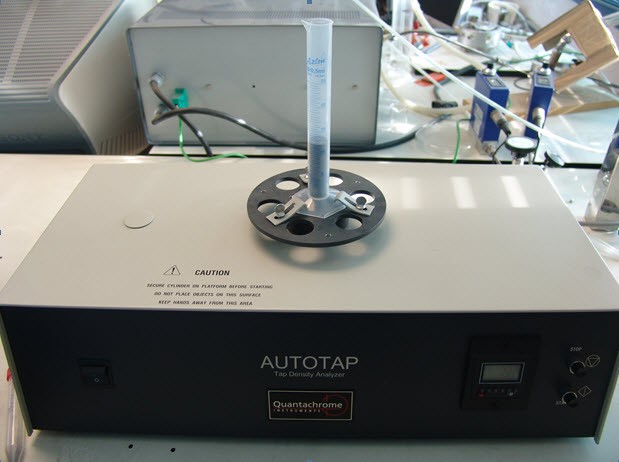 Autotap instrument for packed density measurements of powders.
Descripción: Bulk density and powder packing tests
Each particle of a solid material has effectively the same true density regardless of size or shape, but more or less geometric space is occupied by the material according to the relative particle-particle cohesion and mechanical interference. That is, the apparent bulk densities of powdered, granular or flaked materials are highly dependent on the manner in which the particles are packed together. Furthermore, handling or vibration of particulate material causes the smaller particles to work their way into the spaces between the larger particles. The geometric space occupied by the powder decreases and its density increases; ultimately no further natural particle packing takes place without the addition of pressure and maximum particle packing is achieved. Under controlled conditions of tapping rate, tap force drop and cylinder diameter, this condition of maximum packing efficiency is highly reproducible. Tap density measurement is formalized in a number of international standards to which Autotap conform.
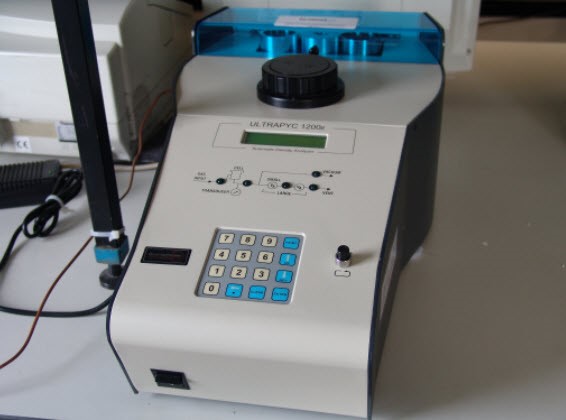 Equipment Ultrapyc 1200e Helium Pycnometer; Quantachrome Instruments
Descripción: Volume and density measurement of porous solids and powders
Especificaciones técnicas:
More info: http://www.quantachrome.com/density/auto_pycnometer.html
Aplicaciones:
Fully automated gas pycnometer, for the measurement of volume and density of powders, granular materials, and solid objects. Typical applications include: porous materials such as catalysts and activated carbons, pharmaceuticals and excipients , foods (raw, refined and end products), ceramics and refractory materials, geological samples (soils, rocks, sediments), building materials (concrete, cement), polymers and composites.
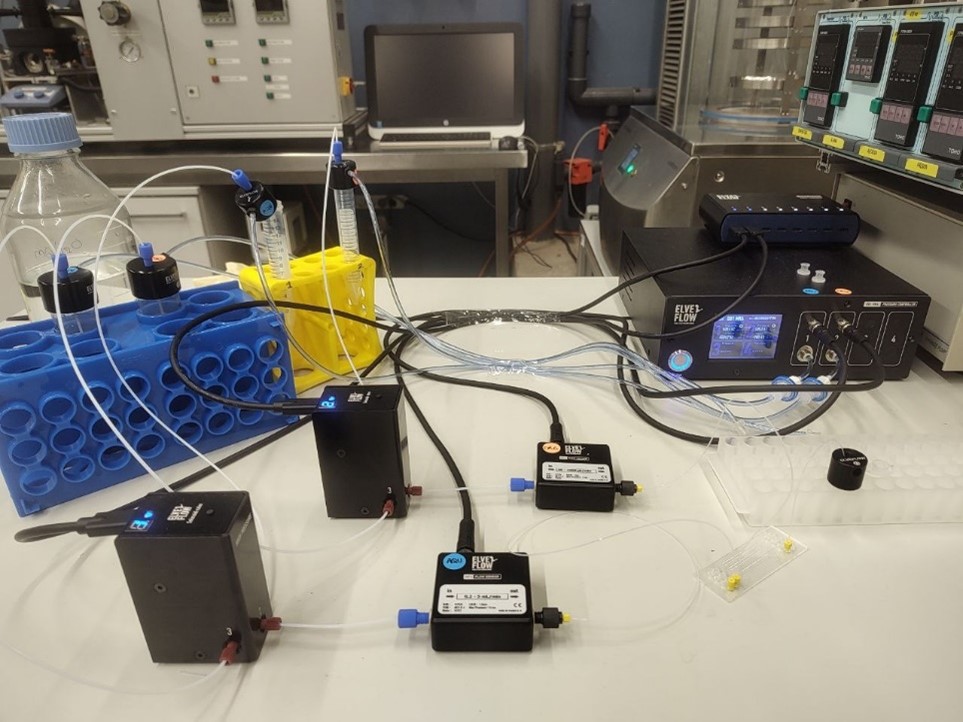
Pulse-free microfluidic system.
Description: Pulse-free miniaturized platform designed to manipulate and control small volumes of fluids at the microscale, ranging from millilitres to microliters. The compact size, reduced sample consumption, faster reaction times, and potential for automation make microfluidic devices advantageous for a wide range of scientific and biomedical purposes. The device offers precise handling of fluids within microchannels or microstructures, enabling various applications such as chemical analysis, biological assays, drug delivery, and point-of-care diagnostics.
Technical specifications:
Applications:
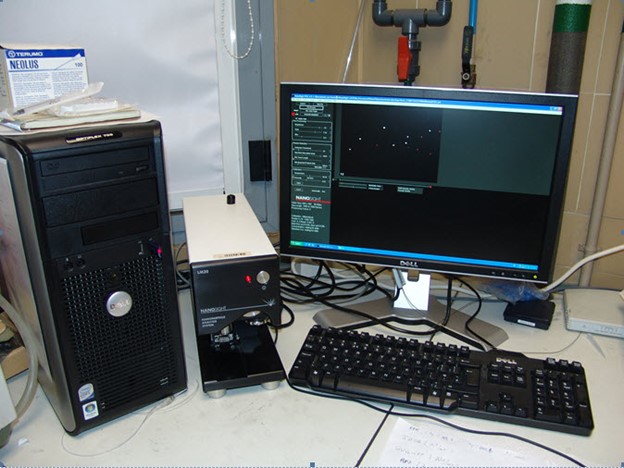
Nanosight LM -20 for Nanoparticle Tracking Analysis.
Description: Particle size distribution (from 10 to 1000nm) and particle concentration by real-time visualization of nanoparticles in a liquid
Technical Specifications:
Nanoparticle analysis range: typically 10 nm – 1000 nm, dependent on particle material
Particle type: any
Solvent: any non-corrosive solvent and water. A range of solvent-resistant seals are available.
Sample volume requirements: 0.3 ml
Applications: Particle size distribution and particle concentration by real-time visualization of nanoparticles in a liquid. In addition to biological samples also paints, pigments, sun creams, inks, metals, metal oxides or fuel additives in any non-corrosive solvent and water can be examined with virtually no sample preparation.