






U27-E03. Licensed software
Licensed software:
- Matlab 202*
- Abaqus2022
- Ansys
- Comsol60
- Gaussian
* possibility of adding any other software compatible with Linux-type systems

Licensed software:
* possibility of adding any other software compatible with Linux-type systems

Open source software:
* possibility of adding any other software compatible with Linux-type systems
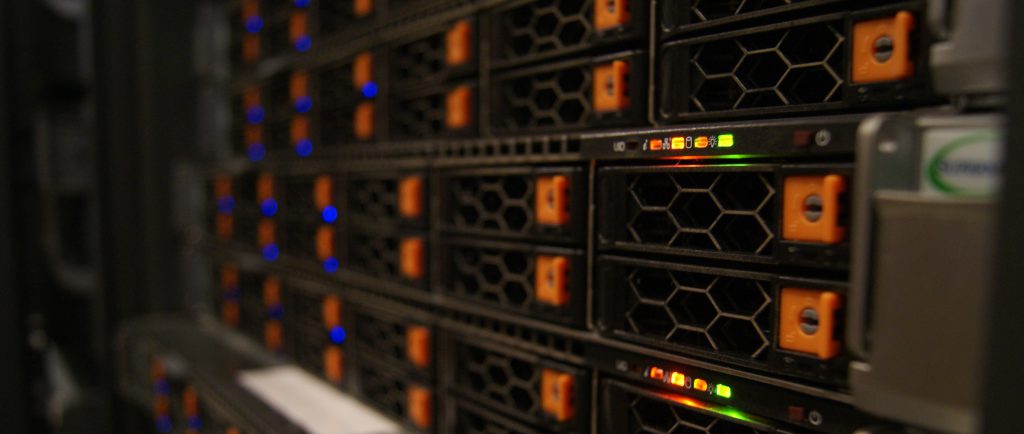
Hermes Cluster: The cluster is unit 27 of NANBIOSIS, HERMES has more than 3260 cores and 5920 parallel processing threads, 26TB of RAM, 264TB nvme and 400TB HDD of shared storage, all connected by a 100Gbps backbone network. In addition, we currently have 251,392 cuda cores, 720GB graphics memory, 1,179.42 peak FP16 TFLOPS, and 828.6 peak FP32 TFLOPS. HERMES is capable of processing a year’s worth of work on a personal computer in just 3 hours, greatly accelerating the work of researchers. Technical staff maintain the system and offer technical support, advice on parallel and high-performance supercomputing.
Highlighted figures:
Animal housing room and animal preparation area equipped with a vital constants monitoring system, 2 full sets of anesthesia equipment, water bath, infrared lamp, injection pump, etc.
Software packages for data acquisition and processing:
400 MHz: AVANCE III console, probes 4mm HRMAS BBI 1H/13C/31P/D, with Z-gradients, 4mm MAS VTN 1H/BB for solid-state, and BCU Xtreme unit for sample temperature control
Customer benefits
HRMAS allows for high-resolution NMR spectra of semi-solid and solid samples by spinning the sample at the magic angle, which minimizes broadening due to sample heterogeneity and anisotropic interactions. Also, potential for characterization of polymers, catalysts, porous materials, and nanomaterials, providing insights into molecular structure, dynamics, and interactions. CPMAS NMR is particularly useful for studying crystalline materials, including organic and inorganic compounds, minerals, and pharmaceuticals. It provides information about chemical composition, crystal structure, and molecular dynamics.
Target customer
Researchers or companies with needs to study solid or semisolid samples regarding structure, characterization, interactions or composition.
References
7T Bruker BioSpec 70/30 USR MR system (Bruker BioSpin GmbH, Karlsruhe, Germany) equipped with a BGA12 mini-imaging gradient insert (maximum amplitude: 400 mT/m and slew rate: 5500 T/m/s). Capability for magnetic resonance imaging and spectroscopy of small animals (e.g. mouse, rat) and studies of model solutions (e.g. new contrast agents). Also capabilities for advanced imaging techniques such as diffusion and perfusion weighted images and fractional anisotropy. Coupled with anaesthetic equipment and vital signs monitoring for in vivo experiments.
Customer benefits
Noninvasive studies of anatomy and biochemical environment depending on the organ. Studies of physiological and pathological anatomy changes with a high resolution level. Magnetic resonance is not based on ionizing radiation and can be performed as many times as needed. Assessment of new therapeutic agents efficacy and novel contrast agents potential. T1, T2 and T2* maps measurement.
Target customer
Research groups or companies working with preclinical models, novel therapeutic or contrast agents, characterization of novel preclinical models based in cancer, inflammatory or neurological diseases.
References
Sheltered magnet of 3.35T. Integrated microwave source Elva-1™ VCOM-10, frequency ≈ 94 GHz. BOC Edwards™ E2M80 Series Vacuum Pump. Sample dissolution and automatic transfer system from polarizer to Bruker 600 MHz spectrometer
Customer benefits
DNP significantly boosts the sensitivity of NMR experiments, enabling the detection of nuclei present at low concentrations or in low abundance compared to conventional NMR techniques. It can be used in metabolomics studies to analyze metabolic pathways, identify metabolites, and investigate metabolic fluxes in biological samples such as tissues, cells, and biofluids. Provides real-time monitoring of chemical reactions and kinetics, providing valuable information about reaction mechanisms, intermediate species, and reaction rates.
Target customer
Researchers or companies with needs to enhance sensitivity and elucidate metabolic pathways or changes occurred during therapy, for example, changes in the glycolytic metabolism within tumor cells. Polarized samples can be used for further in vitro or in vivo experiments depending on the information needed.
References
Muromachi Focused Microwave Fixation System 5KW-6402C. The system is configured to mouse (TAW-174A Applicator Head for WJM-28 Mouse Holder). Capable of fast euthanization (miliseconds range) of mice, and also to halt postmortem metabolism in cell suspensions and biopsy samples, allowing further examination without the need of low temperatures to avoid postmortem changes.
Customer benefits
Halting postmortem metabolism may allow for different long-term studies such as 13C NMR (natural abundance), 2D NMR acquisitions, and also to use physiological temperatures without any postmortem deterioration. Still, the halted sample is still valid for histopathological examination if needed.
Target customer
Customers that work with systems subjected to fast postmortem changes which could make detailed studies challenging without the use of extreme, non-physiological conditions.
References
Possibility of requesting expert advice and guidance while processing and interpreting MR data, especially at the preclinical and clinical levels.
Customer benefits
Customers not willing to install and proceed with a learning curve for using specific software can get expert advice and guidance on metabolite significance, interpretation and meaning.
Target customer
Researchers or companies dealing with MR datasets.
References
El-Abtah ME, Wenke MR, Talati P, Fu M, Kim D, Weerasekera A, He J, Vaynrub A, Vangel M, Rapalino O, Andronesi O, Arrillaga-Romany I, Forst DA, Yen YF, Rosen B, Batchelor TT, Gonzalez RG, Dietrich J, Gerstner ER, Ratai EM. Myo-Inositol Levels Measured with MR Spectroscopy Can Help Predict Failure of Antiangiogenic Treatment in Recurrent Glioblastoma. Radiology. 2022 Feb;302(2):410-418. doi: 10.1148/radiol.2021210826. Epub 2021 Nov 9. PMID: 34751617; PMCID: PMC8805659.