

+34 620 10 75 37info@nanbiosis.com

Posts by Nanbiosis

Symposium Tribute to Prof. Pepe Becerra “40 years of the Bioengineering and Tissue Regeneration Laboratory (LABRET)”

Symposium on the occasion of the retirement of Prof. José Becerra Ratia: “40 years of the Bioengineering and Tissue Regeneration Laboratory (LABRET): tribute to Pepe Becerra”

We are pleased to inform about the Symposium organized by the LABRET group (Bioengineering and Tissue Regeneration Laboratory), University of Malaga, on the occasion of the retirement of Professor José Becerra.

The event will be held, only in person, on July 7 in the morning at the Faculty of Sciences of the University of Malaga

Download the program.

Prof. José Becerra was the Director of the Andalusian Center for Nanomedicine and Biotechnology (BIONAND) since February 2014, before the merger of Bionand and IBIMA (Biomedical Research Institute of Malaga) as IBIMA-Plataforma BIONAND. In fact, Prof, José Becerra took an important role in the incorporation of BIONAND into the ICTS NANBIOSIS till then integrated by Cento de Investigación Biomédica en Red (CIBER) in the area of Bioengineering, Biomaterial, and Centro de Cirugía de Mínima Invasión Jesús Usón, (CCMIJU) and he was also the first Director of the Unit 28 of NANBIOSIS.

In NANBIOSIS we want to show our gratitude to Prof. Becerra, with  appreciation and admiration for his contribution to strengthening this ICTS.

Related News:

Read More

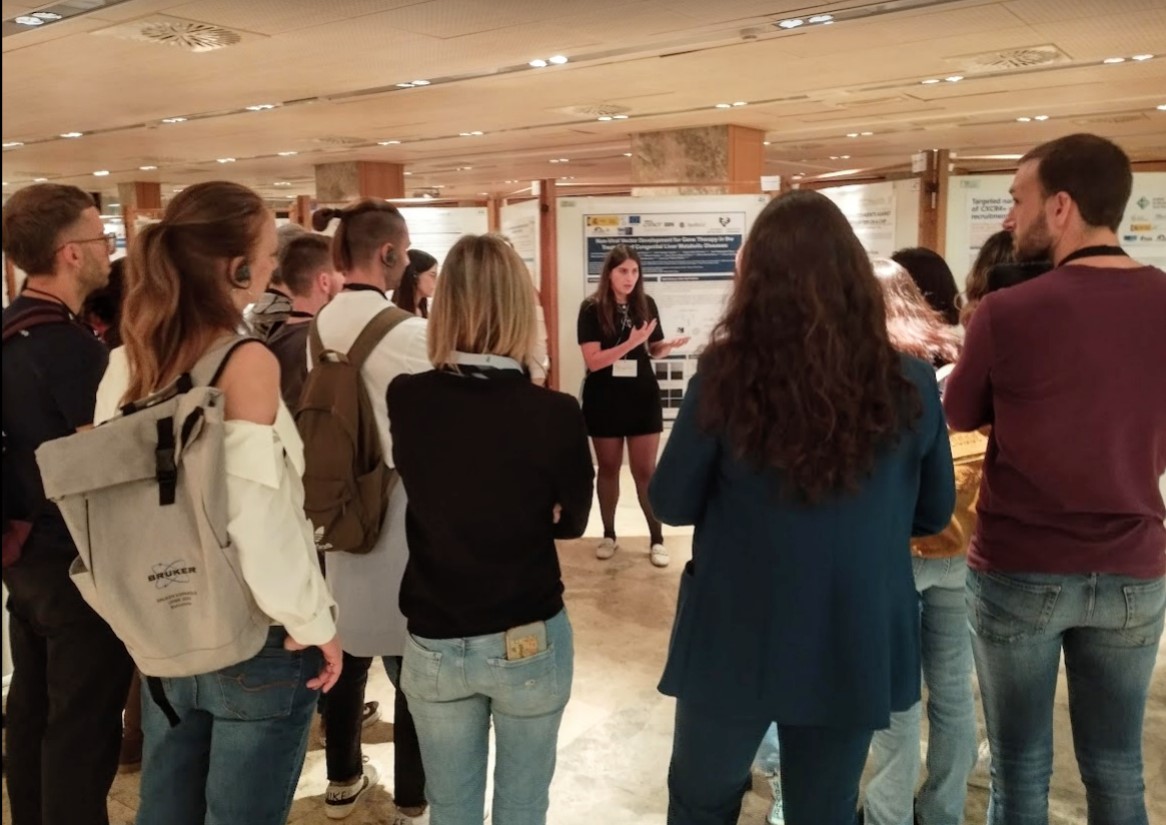
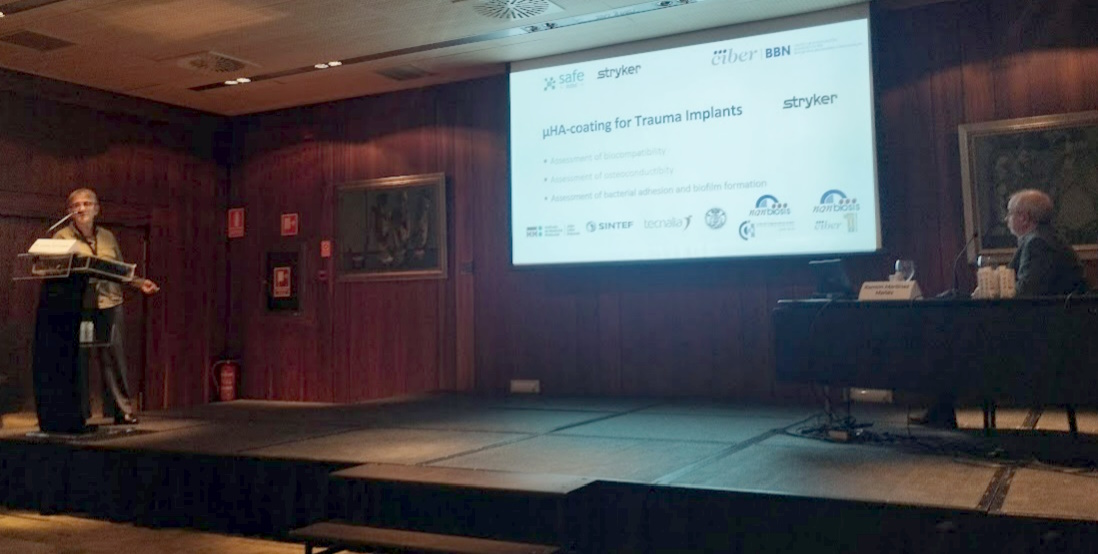
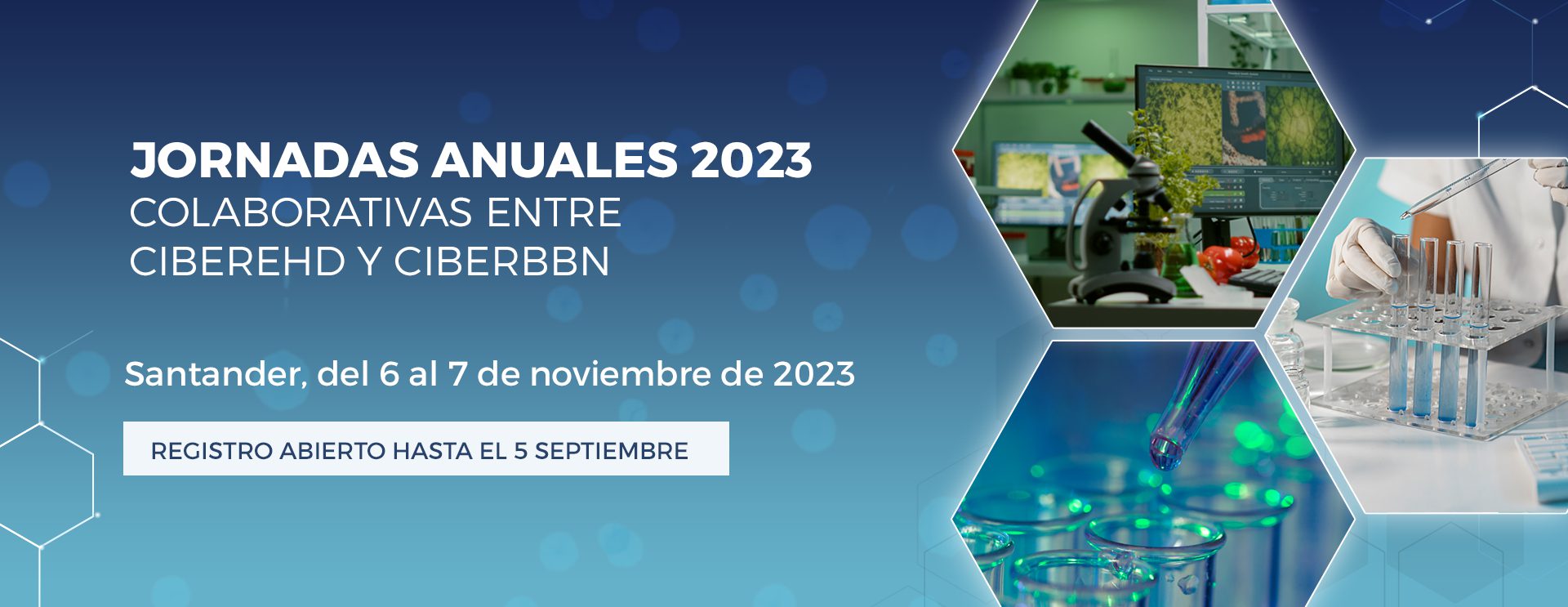
2023 Annual Conference of CIBER-BBN and NANBIOSIS

CIBER-BBN´s Annual Conference has been scheduled for November 6-8, 2023

This year, in the framework of a CIBER program to stimulate collaborations between clinical and technological groups, the conference will be organized in cooperation with a CIBER clinical area, CIBER-EHD: Hepatic and Digestive diseases. (An internal call of collaborative projects BBN-EHD will be open by). The scheme of the event will be slightly different from previous editions:

  • On Monday 6 the scientific sessions will be common for EHD and BBN, with appealing contents for the mixed audience.
  • On Tuesday 7 EHD and BBN sessions will be specific for each area in separate rooms (with common coffee break).
  • The anual session dedicated to NANBIOSIS is scheduled for the afternoon of the Tuesday 7th,
  • After this session we will cellebrate the annual meeting of the NANBIOSIS coordination Committee and the Scientific and Technical Advisory Board of NANBIOSIS.

We will come back with further details. Book the dates!

Read More

Representatives of the Ministry of Science and Innovation visited unit 16 of NANBIOSIS

On May 16 representatives of the General Subdirectorate of Large Scientific-Technical Facilities of the Ministry of Science and Innovation visited unit 16 of NANBIOSIS (created by Centro de Investigación Biomédica en Red -CIBER-, and the University of Extermadura).

Mrs. Beatriz Albella Rodríguez and Mrs. María Jesús Marcos Crespo, got to know first-hand the facilities of unit 16 of the CTS NANBIOSIS of “Surface Characterization and Calorimetry.

The visit was guided by the Scientific Director of Unit 16 of NANBIOSIS, Maria Luisa González Martín, and by Mr. Javier de Francisco Morcillo, Director of the Secretariat for Scientific Infrastructure and Technological Development Vice President for Research and Transfer of the University of Extremadura

The reason for the visit was to receive information on the use of European Regional Development Funds that have served to improve the infrastructures of the Spanish Map of Singular Scientific-Technical Infrastructures (ICTS, in Spanish) to support scientific research.

During the last years, this unit 16 of NANBIOSIS ICTS has enlarged its capacities through the project FICTS1420-14-09, an investment of 1.3 million euros, co-financed with FEDER funds, the Ministry of Science and Innovation, and Junta de Extremadura, Regional Ministry of Economy, Science and Digital Agency.

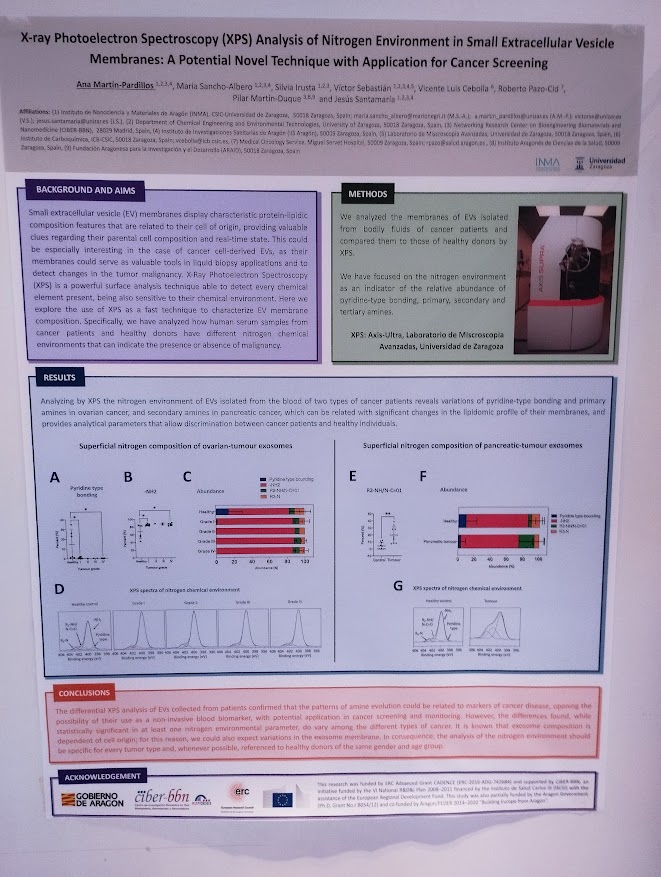
This Unit 16, located in Badajoz, offers the performance of tasks of physical-chemical characterization of surfaces using techniques such as ellipsometry, calorimetry, X-ray photoelectronic spectroscopy (XPS), and detection of secondary ions by means of mass spectrometry by time of flight (Tof-SIMS).

Related News

Read More

U6-E16. Freeze Dryer

Freeze drying (also known as lyophilization) is a water (or other solvents) removal process typically used to preserve materials, to extend their shelf life or reduce its weight. Freeze drying works by freezing the material, then reducing the pressure and adding heat to allow the frozen water in the material to change directly to a vapor (sublimation).

Freeze drying occurs in three phases:

             1-Freezing

Freezing can be done in a freezer, a chilled bath (shell freezer) or on a shelf in the freeze dryer. Cooling the material below its triple point ensures that sublimation, rather than melting, will occur. This preserves its physical form.

              2-Primary Drying

Freeze drying’s second phase is primary drying (sublimation), in which the pressure is lowered and heat is added to the material in order for the water to sublimate. About 95% of the water in the material is removed in this phase. Primary drying can be a slow process.

             3-Secondary Drying

Freeze drying’s final phase is secondary drying (adsorption), during which the ionically-bound water molecules are removed. Most materials can be dried to 1-5% residual moisture.

Technical Specifications:

  • Vacuum pump: 7 m3/h
  • Condenser min. Temperature: – 80º C

Aplications:

Solvent removal is typically used to preserve materials, to extend their shelf life or reduce its weight.

Read More

U6-E05. Tangential flow filtration system

Tangential flow filtration (TFF)  is a process of separation widely used in bio-pharmaceutical and food industries. It is different from other filtration systems in that the fluid is passed parallel to the filter, rather than being pushed through a membrane perpendicularly which can clog the filter media. This method is preferred for its continuous filtration and reproducible performance. The particles that pass through the membrane, the permeate, are put off to the side, while the rest, the retentate, is recycled back to the feed.

 Technical Specifications:

  • Volume: 10 ml
  • Filtration volume rate: 0.01 to 2300 ml/min

Aplications: Tangential flow filtration is used in the following processes:

Concentration: Increases the concentration of a solution by removing fluids while keeping the solute molecules. This process is done by selecting a filter significantly smaller than the solute molecules to allow for a higher retention of solute molecules.

 Diafiltration:  The separation of small and large particles, leaving the smaller particles behind without altering the overall concentration.

Read More

2nd Open call 2023 for preferential access to the NANBIOSIS ICTS

NANBIOSIS opens in June the 2nd competitive open call 2023 for its “Cutting-Edge Biomedical Solutions” and services.

NANBIOSIS is a Research Infrastructure for Biomedicine made up of the Platforms of the Center for Centro de Ivesntigación Biomedica en Red (CIBER- in the area of Bioengineering, Biomaterials, and Nanomedicine -CIBER-BBN), the Preclinical Infrastructure and the Development of Minimally Invasive Technologies, of the Jesús Usón Minimally Invasive Surgery Center (CCMIJU) and the Nanoimaging unit of the Biomedical Research Institute of Malaga-Nanomedicine Platform (IBIMA-BIONAND Platform).

NANBIOSIS as part of the Spanish Map of ICTS (an acronym for “Scientific and Technical Unique Infrastructures” in Spanish), approved by the Ministry of Science and Innovation, is open to all interested national and international users who may come either from the public or the private sector, and who can apply for access under the “Competitive Open Access” or “Access on Demand” modalities.

The 20% of the NANBIOSIS Units’ capacity is granted on the Competitive Open Access modality and will be prioritized according to criteria of scientific and technical quality and singularity of the proposals.

There are 2 calls per year for open and competitive access that allow the prioritisation of the best service proposals. https://www.nanbiosis.es/call/

The 2nd call of 2023 will open on June 1 and applications can be submitted throughout the whole month (due date June 30th). Access application forms submitted after that date will be processed as “access on demand” applications.

Proposals granted in the open and competitive access modality must meet, at least, one of the circumstances listed in the access application form (“order request“), in order to demmonstrate their scientifc and technical quality or singularity.

Thus, for example, applications related to R&D projects funded through national or European calls are eligible, as well as the need to carry out one of the NANBIOSIS “Cutting-Edge Biomedical Solutions” that implies the interaction of several Units, among others.

NANBIOSIS Cutting-edge Biomedical Solutions

Related news:

1st Open call 2023 for preferential access to the ICTS NANBIOSIS

Read More

Workshop on Hyperthermic Oncology

Next Friday, June 9, 2023, a Workshop on Oncological Hyperthermia entitled “Clinical Implementation of Oncological Hyperthermia in Spain and Europe: current situation and prospects” will be held in Barcelona. The location of the event is at the Hotel Front Marítim in Barcelona and the scheduled time is from 9:00 a.m. to 5:30 p.m.

Relevant speakers will present an updated vision on the different modalities of hyperthermia that are being used for cancer treatment. Jorge Contreras (Coordinator of the Spanish Society of Radiation Oncology ) will give a session on the current situation of clinical hyperthermia in Spain. Daniel Ortega (Coordinator of the National Network of Nanotechnology in Translational Hyperthermia) and Teresa Macarulla (Coordinating Investigator of the NoCanTher study on the use of magnetic nanoparticles associated with hyperthermia treatment in pancreatic cancer) will present their experience with a nanotechnological health product in said trial. After a break, Giammaria Fiorentini (Director of the Oncology Unit of the Muraglia di Pesaro Hospital) will give a vision of the use of electro-modulated hyperthermia in pancreatic cancer and in a round table, different professionals will give therir global vision of the application of these techniques from preclinical to clinical implementation.

In addition, regulatory aspects will also be covered. Luc van Hove (Medical, Regulatory and Clinical Affairs expert) will speak from a European perspective on the regulation of medical devices and in vitro diagnostics; while Julia Caro (Head of the area of the National Center for Certification of Sanitary Products) will do so from the perspective of a notified body.

Further information and registration at this link: https://forms.office.com/e/0251iMc2LT

There is additional information at:
-Linkedin https://www.linkedin.com/posts/safenmt_hyperthermia-magnetic-barcelona-activity-7062697943509737472-85wP?utm_source=share&utm_medium=member_desktop.
-Twitter https://twitter.com/abasolo_vhir/status/1659074218850484224

Read More

New look of Nb4D – CAbS (NANBIOSIS U2) “Revolutionising Diagnosis”

Nb4D has a new look on line! Nb4D Group (of IQAC-CSIC and CIBER-BBN) has lunched a new website “Revolutionsising Diagnosis with the aim to facilitate a faster and easier navigation througth their “pioneering research to develop new diagnostic and therapeutic approaches” and their solutions and expertise to help researchers and companies.

Antibodies, bioreceptors, hapten design and synthesis, immunoanalytical method development, new ivd tools, surface functionalization, therapeutic antibodies and much more knowledge and expertise revolutionising diagnosis.

The new website contains a page for CAbS-NANBIOSIS. Custom Antibody Service (CAbS), unit 2 of the ICTS NANBIOSIS

Read More

NABIHEAL project launches website

The website for NABIHEAL, an EU-funded Horizon Europe project developing biomaterials for complex wound healing, is now online.

The Horizon Europe project NABIHEALi project is coordinated by the Center for Biomedical Research Network (CIBER) at the Institute of Materials Science of Barcelona (ICMAB-CSIC).

This project will apply one the Cutting Edge Biomedical Solutions” of NANBIOSIS for the preparation of different nanoestructures with antimicrobial properties, required for the development of the final multifunctional wound healing biomaterials. This case will gather the expertise of two NANBIOSIS unit: NANBIOSIS U6 will produce and characterize these nanoestructures with antimicrobial properties, which will be tested in NANBIOSIS U16.

Find out more about the project and what its impact will be, and browse the 14 partners from 7 countries to see how each contributes to the project’s objectives. NABIHEAL WEBSITE

Related news: New European Project NABIHEAL in biomaterials for complex wound healing

Read More

U6-E08. Mastersizer 2000

Mastersizer 2000 – Malvern

Description:

The Mastersizer 2000 uses the laser diffraction technique to measure the size and particle size distribution of materials. This is carried out by measuring the intensity of light scattered when a laser beam passes through a sample of dispersed particles. The detectors measure light intensity for red and blue light. The data is analyzed to calculate the size of the particles that created the scattering pattern.

The equipment contains two sample dispersion units:
– Wet: for samples in solution, which can be applicable to different solvents.
– Dry: for solid samples in powder form, which are dispersed by a current of air.

Technical specifications:

• Particle size: 10 nm – 3.5 mm
• Measurement principle: Mie and Fraunhofer dispersion
• Light source:
– Red: He-Ne (632.8 nm)
– Blue: LED (470 nm)
• Optical Alignment: Automatic rapid alignment system with darkfield optical reticle and multi-element alignment detector
• Dispersion units:
– Dry route
– Wet route
• Operating temperature: 5º to 40º C

Applications:

• Molecular and particle size distribution analysis.
• Powder fluidity analysis
• Particle compression density analysis
• Stability analysis in suspensions and emulsions
• Analysis of the dissolution rate of materials
• Determination of the reaction rate in solid systems

Read More