

+34 620 10 75 37info@nanbiosis.com

Posts by Nanbiosis

The Medicine of the Future needs the Nanomedicine Revolution. This is why

The medicine of the future is an increasingly tackled topic. In the context of global concern for the sustainability of the health system (chronic diseases, new disorders, aging population and financing problems), nanomedicine could promote more affordable and personalized health care and improve the quality of life of the patients.

Between innovative techniques already implemented and concepts that evoke science fiction (nanobots, fluorescent particles working as spies, tiny Trojan horses introduced into our body …), nanomedicine generates great expectations.

Nanomedicine, what is it exactly?

Nanomedicine is the application of nanotechnology to medicine, that is, the use of nanotechnologic systems for the prevention, diagnosis or treatment of diseases, due to the particular properties that materials present on a nanometric scale. (Yes, although it seems strange, the same material has totally different attributes and behaviours when “nano” amounts of it are manipulated, what is very important in medicine, since many of the processes of the human body take place on a nanometric scale).

The current state, thanks to the previous effort.

When in 1959 Richard Feynmand, (Nobel Prize in Physics in 1965), gave his speech “There is a lot of space down there”, he opened the door to research at the nano scale: from 1nm to 100nm, this is one-millionth of a millimeter (10-9 meters); we are talking about the range of sizes resulting from dividing the diameter of a hair between 1,000 and 10,000, (or what a nail grows in a second).

Since the entry into the market of the first nanomedicine in 1995 (Doxil®, a drug encapsulated in liposomes for the treatment of cancer), nanoparticles or nanostructures have been developed for the controlled release of drugs in cancer and other pathologies, nanodevices have been created for disease diagnosis or nanomaterials have been designed for applications in regenerative medicine, and even messenger RNA vaccines for Covid-19, such as those from Pfizer and Moderna, are nanoformulated. Today there are on the market a hundred nanoformulated drugs all thanks to previous research and development of nanomaterials and nanoparticles over the last three decades.

The “Observatory of Trends in Medicine of the Future” promoted by the Roche Institute foundation has recently published a Report on Nanomedicine coordinated by Dr. Ramón Martínez Máñez, Professor of Inorganic Chemistry at the UPV and Scientific Director of the Centre for Networked Biomedical Research in Bioengineering, Biomaterials and Nanomedicine (CIBER-BBN) in which Dr. José Becerra, Professor of Cell Biology at the University of Malaga and Principal Researcher at CIBER-BBN, BIONAND and IBIMA, Dr. Pilar Marco, Principal Investigator of the Nanobiotechnology group for the diagnosis (Nb4D) of the IQAC-CSIC and Coordinator of the Nanomedicine Research Program of the CIBER-BBN and Dr. María Jesús Vicent, Chief Researcher of the Therapeutic Polymers Laboratory and coordinator of the Advanced Therapies Area of ​​the Príncipe Felipe Research Center have participated as experts. The report was presented at the IV Conference “Anticipating the Medicine of the Future” on November 30, 2021 where a debate was held by the above mentioned in which various topics related to nanomedicine were discussed, such as its applications and barriers.

Nanomedicine applications of today and tomorrow

Nanomedicine is completely transversal, multidisciplinary and dependent on other disciplines, so its applications are multiple and complementary to other branches of knowledge such as artificial intelligence, but the following fields stand out fundamentally.

The design of nanomaterials that improve biocompatibility or biomechanical properties is investigated and can be used for the manufacture of implants that allow replacing portions of diseased tissue and that can even be designed in a personalized way attending to the individual response of each patient, minimizing the risk of rejection by the patient in regenerative medicine.

Nanoparticles are used to build highly sensitive nanodiagnostic platforms, which provide comprehensive biological information easily, quickly and economically at an increasingly early stage. Pilar Marco visualizes a future where “the diagnosis could be our molecular fingerprint, so that the detection of changes in said fingerprint could lead to the detection of a disease before the patient presents symptoms. In turn, this will contribute to prediction and prognosis since, if a large amount of information is available, it can be crossed with genetic information”.

Nanomedicine makes it possible to improve the pharmacokinetics and pharmacodynamics of current drugs, so that they specifically deploy their activity in diseased cells and tissues in a controlled way over time and crossing any biological barrier, which is called controlled drug release. According to Ramón Martínez “Any disease can be susceptible to use these systems to deliver a drug in the appropriate organ or tissue with the reduction of drug doses and side effects.”

Finally, nanotechnology methods facilitate the fusion of diagnosis and therapy in the new medical field of theragnostic; diagnose and treat at the same time by understanding the biological response to treatments, that is, the administration of drugs whose molecules allow visualize how the drug is working.

Barriers faced by nanomedicine

In addition to the difficulties presented by nanomedicine in matters of regulation and industrial property, the aforementioned experts agree that one of the most important challenges is the standardization of manufacturing procedures and quality controls, investment is needed in infrastructures to fine-tune manufacturing and standardization systems (manufacturing of nanoparticles under GMP) and in collaboration with the private sector, which is crucial, to make nanomedicine reach the productive sector and society.

But there are also barriers in the research itself, and funding is needed to break them down. In nanomedicine research, cost / effectiveness analyses have to be focused on the long term. Professor José Becerra explains it very clearly: “Research topics become fashionable and it happens frequently that the years go by and administrations “get tired” of financing a certain field and this is a problem because if a tree is planted by a person who knows It takes ten years to bear fruit, this person has to take care of the tree, but if we give the tree care to someone who does not know about trees, probably this person will abandon the tree in five years … Scientific policies have to persevere in financing nano and accompany it with an improvement in the regulation of products and only then will companies invest in this area”.

At the end of the debate, Professor José Becerra celebrated that the Carlos III Health Institute opted, fifteen years ago, for the creation of a CIBER in Bioengineering, Biomaterials and Nanomedicine, as a tool for scientific policy, he also mentioned the NANBIOSIS platform created by CIBER-BBN, CCMIJU and BIONAND, recognized as ICTS by the Ministry and available for companies and researchers to produce and characterize bio and nanomaterials, and stated that “it is evident that it is not possible to advance in the transfer of knowledgy from nano to the clinic at the same rate as is done in other knowledge areas but to take care of this project is essential”.

Related news:

Nanomedicine in the Medicine of the future

The Nanomedicine Revolution

informe sobre nanomedicina

‘Point-of-care or PoC’ devices are able to directly detect the genetic material of the virus in just 30 minutes

A more effective nanomedicine has been developed for the treatment of Fabry rare disease

Nanomedicine: how to get drugs to the place where they have to act.

A new generation of devices for the rapid, cheap and easy diagnosis of candidemia

New Nanomedicines for the topical treatment of complex wounds

Sources of information:

Nanomedicine (European Nanotecnology Platform)

IV Jornada Anticipando la Medicina del Fututo

Nanomedicine Report

Nanomed Spain

Read More

‘SAFE-N-MEDTECH’ and ‘PHOEHIX’ OITBs in CIBER-BBN and NANBIOSIS annual Conference.

National and international leading researchers met online last November 15 and 16 at the XV CIBER-BBN Annual Congress to discuss the latest advances in bioengineering, biomaterials and nanomedicine research, and promote further collaborations in the field.

This year’s CIBER-BBN Annual Conference included three plenary lectures given by internationally recognized experts in the fields of SARS-CoV-2 infection and vaccination, biomedical signal processing for sleep disorders, and regenerative medicine and biosensors. In addition to a selection of internal collaborations, valorization projects and collaboration projects with the CIBER of Oncology, the three programs of the Precision Medicine Infrastructure (IMPaCT) were presented.

NANBIOSIS ICTS contributed to the scientific program of the Conference with a session dedicated to the Open Innovation Test Beds (OITBs). More precisely, Dr. Ángel del Pozo, from Biokeralty presented the SAFE-N-MEDTECH OITB as an example of innovation booster for medical devices, while Dr. Emre Türeli, from MyBiotech GmbH, was invited to describe PHOENIX, a Pharmaceutical OITB for Enabling Nano-pharmaceutical Innovative Products.

Both OITBs’ scope is to cover the gap between research in nanomedicine and clinical practice. Their main objective is to provide the research community and the rest of stakeholders with a fully functional infrastructure for the testing, validation and upscaling of new nano-pharmaceuticals and medical devices through a single entry point.

NANBIOSIS is participating in SAFE-N-MEDTECH leading the corner stone work-package of preclinical validation of nano-enabled medical technologies and also contributing to their previous physico-chemical characterization. Besides that, it coordinates a Test Case about innovative nanostructured implants for bone repair, and participates in three more, all proposed by industrial partners of the project.

CIBER-BBN is participating in Phoenix OITB, as well, with the Unit 6 of NANBIOSIS ICTS (Biomaterials Processing and Nanostructuring Unit) at the Institute of Materials Science in Barcelona (ICMAB-CSIC) as well as the BioNanoSurf group at the Aragon Institute of Materials Science (INMA-CSIC).

These projects have received funding from the European Union’s Horizon 2020 Research and Innovation Programme under Grant Agreements No. 814607 (SAFE-N-MEDTECH) and No. 953183 (PHOENIX)

Read More

Nanomedicine in the Medicine of the Future

Scientists of CIBER-BBN and NANBIOSIS ICTS have participated in the 4th Conference “Anticipating the Medicine of the Future”, which took place on November 30th, organized by the Roche Institute Foundation. The topics for this ediction had been identified by the Observatory of Trends in the Medicine of the Future: Pharmacogenomics, Nanomedicine and Epigenomic

The event counted with three roundtables for discussion in relation to the three topics. The second one, on Nanomedicine, was moderated by Joaquín Arenas, Director of the Research Institute of the 12 de Octubre University Hospital.

Ramón Martínez Máñez, Professor of Inorganic Chemistry at the Interuniversity Research Institute for Molecular Recognition and Technological Development (IDM) of the Polytechnic University of Valencia and Scientific Director of CIBER-BBN and Unit 26 of NANBIOSIS gave a talk entitled “Macro problems, nano solutions”. After that, the debate was openwith the participation of Maria Pilar Marco, Research Professor of the Spanish Council for Scientific Research (CSIC) and Coordinator of the Nanomedicine Research Program CIBER-BBN and Scientific Director of unit 2 of NANBIOSIS, CAbS, José Becerra, Emeritus Professor of of Cell Biology of the University of Malaga and Principal Investigator of CIBER-BBN, BIONAND and IBIMA and Maria Jesús Vicent, Coordinator of the Advanced Therapies Area of the Principe Felipe Research Center.

The Roundtable discussed the applications of nanomedicine in the Medicine of the Future and in Personalized Precision Medicine, as well as the challenges facing nanomedicine.

The Observatory of Trends in the Medicine of the Future, promoted by the Roche Institute Foundation, aims to generate and disseminate knowledge in areas of incipient knowledge related to Personalized Precision Medicine and that are part of the Medicine of the Future.

In this context, the fundation Instituto Roche has recently published a report on nanomedicine coordinated by Ramón Martínez in which José Becerra, María Pilar Marco and María Jesús Vicent have participated as experts.

Currently, nanoparticles or nanostructures are being applied for the controlled release of drugs in cancer and other pathologies and nanodevices for the diagnosis of diseases or the development of nanomaterials for applications in regenerative medicine. In the coming years, and with the translation into clinical practice of more and more developments based on these technologies, nanomedicine will contribute to the medicine of the future approaching the diagnosis and treatment of diseases earlier, more efficiently and in a more efficient and personalized way.

https://www.institutoroche.es/observatorio/nanomedicina

Read More

New therapeutic strategies for the treatment of advanced breast and colon cancer

Sara Montero, researcher of the “Drug Delivery and Targeting” of CIBER-BBN and VHIR, presented her thesis work on November 22 “Nanotecnnology mediated extrategies targeting cancer stem cells for advanced cancer tratment”, directed by Dr. Simó Schwrtz and Dr Diana Rafael.

In vivo experiments where carried out through the Unit 20 of the ICTS NANBIOSIS.

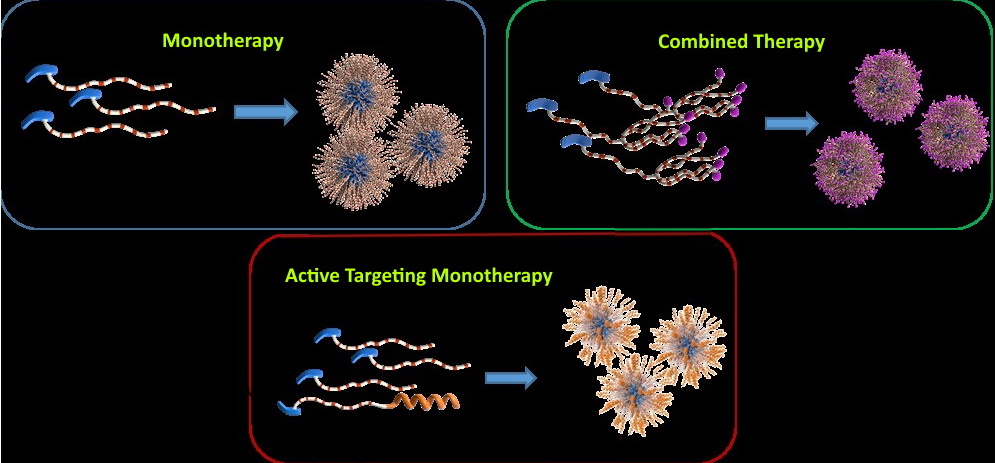
The work presented by Sara Montero shows two different types of therapeutic strategies for the treatment of advanced breast and colon cancer. Both strategies focus on blocking proteins essential for the survival and proliferation of cancer stem cells (CMC), known to be the main responsible for current therapeutic failures, tumor repopulation after treatments, as well as the causes of the aggressiveness of the resulting metastases. In addition, both strategies take advantage of the advantages offered by nano-drug delivery systems (nano-DDS) to increase the therapeutic efficacy of administered anticancer agents, reduce harmful side effects and, most relevant, specifically eliminating the CMC fraction within tumors. This project has also made it possible to evaluate the effects of combined therapy, using conventional drugs for the treatment of the disease together with specific molecules for the eradication of CMC in the same nanoplatform; specifically a system of polymeric micelles made up of the amphiphilic polymer Pluronic® F127. Together, this work opens the possibility of co-administering different types of compounds to simultaneously eliminate the two main cell populations that make up tumors and thus achieve complete tumor remission.

Read More

Extracellular vesicles secreted by cancer stem cells promote angiogenesis and disease progression

Patricia González, researcher of the “Drug Delivery and Targeting” of CIBER-BBN and VHIR, presented her thesis work on November 19 where she lays the foundations to understand the role of different subpopulations of extracellular vesicles (VEs) secreted by tumor models in the regulation of tumor plasticity, as well as its effect on the tumor microenvironment and disease progression.

In the project, it has been described for the first time how the VEs secreted by the cancer stem cell subpopulation are responsible for activating fibroblasts in the tumor microenvironment and promoting angiogenesis, thus facilitating disease progression. Furthermore, it has been possible to discern the role of these vesicles in the regulation of cell plasticity. In this sense, the VEs from tumor stem cells would act as effectors of cell differentiation in contrast to the action of the VEs secreted by differentiated cancer cells, which would stimulate the acquisition of stem cell characteristics.

In order to carry out the in vivo experiments, the services of ICTS Nanbiosis were used, through the U20.

The results open a new line of research in the group with a long journey ahead, setting as main objectives the identification of the molecular actors responsible for the activities described above as well as the translation of said knowledge into specific therapeutic strategies.

Read More

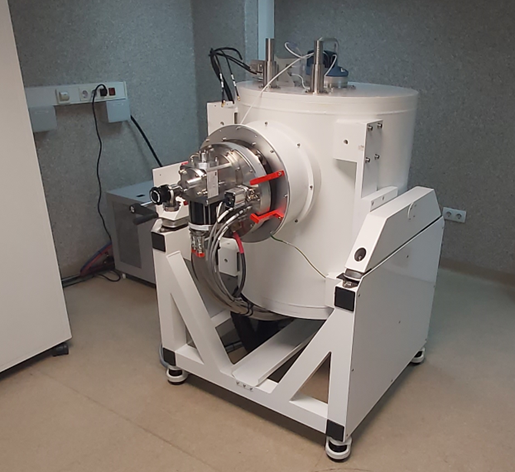
New Equipment available for the Regenerative Medicine Research Line of the U10 of NANBIOSIS

The Unit 10 of Drug Formulation of the ICTS NANBIOSIS coordinated by the CIBER-BBN NanoBioCel group directed by Jose Luis Pedraz, which belongs to the University of the Basque Country, has been present at the signing of the agreement that gives support by the Provincial Council of Alava within the framework of the Advance Pharma Development project, together with the research and technological development center TECNALIA. 

With this agreement, the NanoBioCel research group will receive in the next two years (2021-2023) a contribution of 650,000 €, which will allow the hiring of research personnel and the purchase of specific equipment for the regenerative medicine research line. The first equipment purchased to strengthen U10 in Bio-printing is the RegenHU Bioprinter: R-GEN 100, which will be located in the P3 Laboratory of the Lascaray Research Building. This bioprinter will bring two new technologies to the bioprinting techniques currently being used at U10: extrusion and droplet techniques. With RegenHU it will be possible to work with two new bioprinting processes: electrospinning and electrowriting. Electrospinning is a promising technique for the controlled release of drugs and electrowriting (electrostatic writing) will allow the construction of scaffolds with variable diameters in their design and elaboration.

Read More

‘Point-of-care or PoC’ devices are able to directly detect the genetic material of the virus in just 30 minutes

Twenty five Spanish researchers linked to the Higher Center for Scientific Research, CSIC, who are working more directly on the project ‘Point-of-care tests for the rapid detection of SARS-CoV-2’ – Studies for the development of technologies effective diagnosis and early detection of SARS-CoV-2- have met since last Wednesday and until this Friday at the Benasque Science Center ‘Pedro Pascual’ to analyze the state or of the different programs and lines of research on the covid-19.

After months of intense work, among the most outstanding achievements in relation to the detection of the genetic material of the virus, is the development of a series of technologies that allow this detection without the need for PCR. Researchers have managed, by designing specific probes, to directly detect the genetic material of the virus in just 30 minutes.

Dra. Pilar Marco, researchar of CSIC and Scientific Director of Nanbiosis U2 Custom Antibody Service (CAbS) – explains that “the PCR technique, which it is very sensitive and very precise, has a disadvantage in terms of time because it requires an amplification stage of this genetic material that makes the process long, this is going to revolutionize the diagnosis, not only for Covid-19, but also of other infectious diseases”.

Researcher of three units of NANBIOSIS, attended the meeting and some of them gave talks:

  • Nuria Pascual, Scientific Coordinator of NANBIOSIS U2 CAbS espoke about Antibodies production
  • Also from NANBIOSIS Unit 2, J. Pablo Salvador espoke about Immunochemical tests and .
  • Serological test of peptide epitopes were explained by Julian Guercetti.
  • Anna Avigñó, Scientific Coordinator of NANBIOSIS U29, espoke about Design of oligonucleotides for a new method in Covid-19 detection without PCR.
  • And Macarena Duran, representing MS4N group and the Peptide synthesis unit of NANBIOSIS (U3) explained the synthesis of potential SARS-COV2 epitopes that have been applied for hybridome selection for mAb and to generate epitope microarrays to analyze serological samples.

The meeting has served to share the most relevant results that have been obtained in the context of the project, as well as discussion of new strategies to address problems that have arisen throughout the project and in turn, discuss future objectives.

Other related news by NANBIOSIS:

Source of information: Heraldo de Aragón

Read More

Vaccines against Covid, biomedical signal processing for sleep disorders and regenerative medicine, at the XV CIBER-BBN Annual Conference

The CIBER for Bioengineering, Biomaterials and Nanomedicine (CIBER-BBN) will hold its XV Annual Congress, which will be held online for another year, on November 15 and 16. The conference will begin with a welcome that will be given by Cristóbal Belda, director of the ISCIII, and the scientific director of CIBER-BBN Ramón Martínez Máñez, and will aim to share advances in research in bioengineering, biomaterials and nanomedicine, in addition to advancing synergies with other disciplines and institutions.

This year’s edition will include three plenary talks given by internationally recognized experts in the fields of SARS-CoV-2 infection and vaccination, biomedical signal processing for sleep disorders, and regenerative medicine and biosensors.

In addition to a selection of internal collaborations, valorization projects and collaboration with the CIBER de Cáncer (CIBERONC), the CIBER-BBN researchers will be able to know first-hand the three programs of the Precision Medicine Infrastructure (IMPaCT) and the perspectives of NANBIOSIS ICTS.

Likewise, there will also be time to highlight the best works of young researchers in recognition of the best publications of 2020 with CIBER-BBN member authors under 30 years of age.

Access to the broadcast talks and subsequent debate is free after registering for the event at this link: https://jornadasanuales.ciber-bbn.es/

Read More

Colloidal nanocrystals for energy applications

Semiconductors are materials used in a wide ranfe of applications since they are capable of capturing light and allowing us to take advantage of it. In addition, if we reduce its size to the nanometric scale we can activate additional very interesting properties

On October 16, “Technoscience and Energy” took place in Inseec, Lyon (France), a science-industry transfer event between French and Spanish companies and researchers from the energy sector in France. Among the invited speakers was María Bernechea Navarro, ARAID Investigator, at the Institute of Nanoscience and Materials of Aragon at University of Zaragoza-INMA.

In her talk, entitled “COLLOIDAL NANOCRYSTALS FOR ENERGY APPLICATIONS”, María Bernechea showed the development of nanomaterials stabilized in solution (to facilitate working with them), composed of abundant and non-toxic elements, as well as their use in various applications related to clean energy.

“We synthesize colloidal nanosemiconductors that are used for different applications. We mainly use these nanomaterials to harvest solar light and convert it into electrical current (solar cells) or remove pollutants in wastewater (using the materials as photocatalysts). More recently we have started to study the incorporation of these materials on carbon supports to fabricate electrodes that can be used in electrochemical storage devices (batteries or supercapacitors). These nanosemiconductors are fabricated at the NANBIOSIS U9 Synthesis of Nanoparticles Unit of CIBER-BBN and the INMA”, has explained María.

Last October 29, María Bernechea gave also a talk at the Faculty of Sciences of La Coruña entitled, “Colloidal Nano-Semiconductors for solar cells and other applications” that is avalilable in youtube. Dr. Bermechea expressly thanked the access to the ICTS NANBIOSIS for the development of these semiconductors.

Article of reference: Aina, S., Villacampa, B., Bernechea, M., Earth-abundant non-toxic perovskite nanocrystals for solution processed solar cells, Mater. Adv., 2021, 2, 4140 [DOI]

Read More

Nanobodies for biosening at the European Biosensor Symposium digital seminars

Next November 8, the researcher of NANBIOSIS U2 Custom Antibody Service (CAbS)  J.-Pablo Salvador will host the Seminar “Nanobodies for biosensing” in the framework of European Biosensor Symposium digital seminar series which are schedulled on the third Tuesday of every month.

Nanobodies® (Nbs) are the recombinant binding domain from the heavy chain antibodies tipically produced from camèlids.  Besides their great potential as molecules in drug development, Nanobodies possess excellent functional properties that aid in their development for diagnostic tools. In this seminar, Dr. Salvador will explain the the outstanding properties of Nanobodies. Three graduate student speaker and up to five graduate student poster presenters will will take the opportunity to show different applications in the biosensing area.

The online event will take place on 16th November at 18:00 

Registration is free.

Further information on the European Biosensor Symposium digital seminars

Read More